Driving License Categories in Pakistan: Complete Guide and Requirements 2027
Understanding every driving license categories in Pakistan requirement is essential for anyone who operates a motor vehicle legally across the country. A driving license is an important legal document for anyone who operates a motor vehicle in Pakistan. Its importance is not limited to carrying a license card during a traffic check. A valid driving license confirms that a person has been authorized to drive a particular category of vehicle under the applicable rules. It also connects the driver with road safety requirements, traffic enforcement, vehicle categories, professional driving responsibilities, and, in many cases, employment opportunities.
echallanchecker.online is here to provide authentic information.
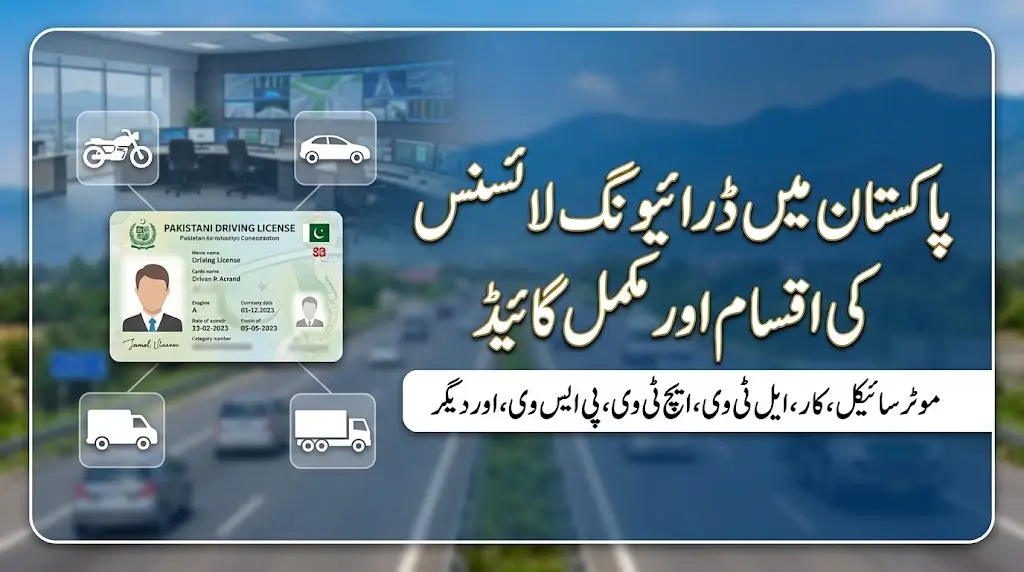
The importance of a driving license becomes even clearer when driving is considered from both provincial and international perspectives. In Pakistan, driving license administration is handled through provincial systems, which means that procedures, categories, testing requirements, fees, renewal arrangements, and digital services can differ between Punjab, Sindh, Khyber Pakhtunkhwa, and Balochistan. At the same time, international road-safety practice treats driver licensing as part of a broader system designed to make sure that people operating vehicles have the required knowledge and practical ability.
What Is a Driving License and Why Is It Important?
Legal authorization to drive
A driving license is an official authorization that allows a person to operate the vehicle categories covered by that license. It is different from simply knowing how to drive. A person may have practical experience with a vehicle, but legal authorization depends on the applicable licensing requirements and the category for which the driver is licensed.
This distinction is important because vehicles differ greatly in size, weight, handling, braking, passenger capacity, and operating conditions. The skills needed to control a motorcycle are not identical to those required to operate a heavy truck or passenger bus. Licensing categories provide a way for authorities to identify the type of vehicle a driver is authorized to operate.
Driver identification and enforcement
A driving license also gives traffic authorities a standardized way to identify a driver and determine whether that driver is authorized for the vehicle being operated. This becomes important during routine traffic enforcement, traffic violations, road accidents, and other situations in which the driver’s legal status needs to be established.
Modern licensing systems can also maintain electronic records. These records can support license verification, renewal, upgrades, replacement services, and other administrative functions. Digital licensing does not change the basic purpose of a license; it simply makes the record and service process easier to manage.
Importance for road safety
Driver licensing is closely connected with road safety because licensing systems can require applicants to learn traffic rules, demonstrate driving ability, and meet category-specific conditions before receiving authorization. The purpose is not simply administrative. The broader objective is to place properly authorized drivers on public roads and create a system in which driving responsibilities are clearly defined.
International road-safety policy treats driver licensing as one part of a wider safe-road system. Training, testing, enforcement, safer vehicles, safer road design, speed management, seat-belt use, motorcycle helmets, and post-crash care all contribute to road safety. A driving license therefore has value because it operates within this larger framework rather than functioning as an isolated document.
Driving License Importance by Province in Pakistan
Punjab driving license importance
In Punjab, a driving license is important for private drivers, professional drivers, motorcycle riders, transport workers, and people who need to use vehicles as part of their employment. Punjab has developed a centralized digital licensing structure that supports license issuance, renewal, upgrades, verification, and related services across the province.
The importance of the license is particularly clear in a large urban center such as Lahore, where private cars, motorcycles, commercial vehicles, public transport, delivery vehicles, and heavy transport operate on the same road network. Different vehicle types create different driving responsibilities, which is why the correct license category matters.
Punjab’s licensing system also provides separate processes for different license services. A driver may need a learner license when starting, a regular licence after completing the required process, renewal when the license expires, a duplicate when the document is lost, or an endorsement when another vehicle category needs to be added.
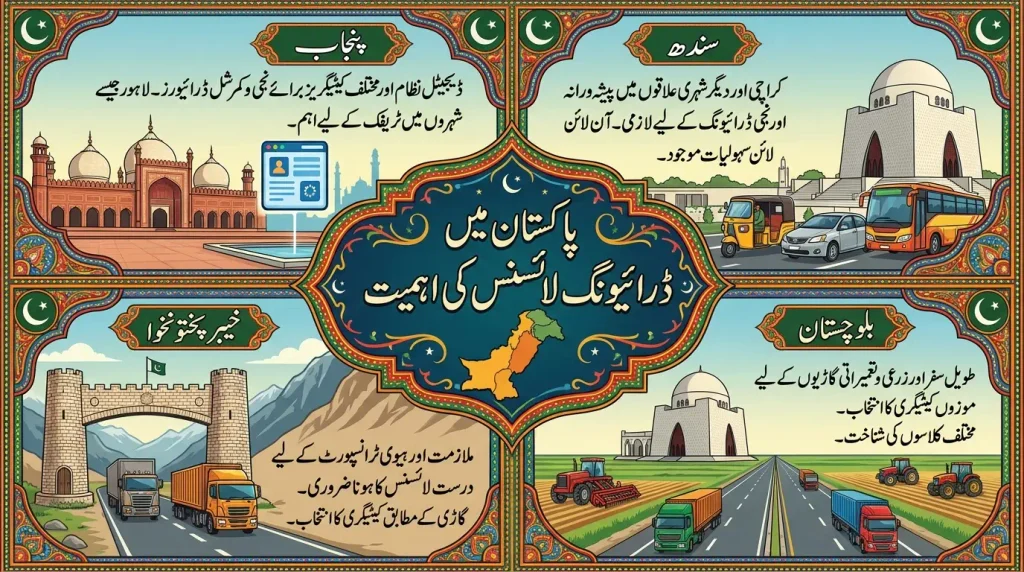
Sindh driving license importance
In Sindh, a driving license is important for drivers throughout the province, including the large metropolitan environment of Karachi and the many other urban and rural areas where motorcycles, cars, buses, rickshaws, commercial vehicles, and goods vehicles are used.
Sindh has also moved toward digital driving license services. Digital processing can make it easier for applicants to submit information, manage applications, and move through the licensing process. However, the move toward online services does not remove the importance of selecting the correct license category or meeting the applicable testing and legal requirements.
For professional drivers in Sindh, the correct driving authorization can be especially important because passenger and goods transportation can involve requirements beyond ordinary private driving. A person should therefore check the applicable category and transport rules before using a vehicle commercially.
Khyber Pakhtunkhwa driving license importance
In Khyber Pakhtunkhwa, the driving license is important for private and professional drivers and is administered through the province’s transport and licensing structure. Different licensing services cover categories such as light transport, heavy transport, and passenger-service driving.
The category becomes especially important when driving is connected with employment. A person applying for a professional driver position may be required to hold a specific category rather than simply having any valid driving licence. Employers can therefore use the licence category as one part of determining whether an applicant has the authorization required for a particular driving job.
For drivers in KP, the practical lesson is simple: the licence should match the vehicle and the work being performed. A private car licence should not automatically be treated as permission to operate a heavy transport vehicle or a passenger vehicle for professional service.
Balochistan driving license importance
In Balochistan, driving licences are important because the province includes large urban areas as well as extensive rural, agricultural, transport, construction, and long-distance travel environments. The range of vehicles used in these settings makes vehicle categories particularly relevant.
The provincial motor vehicle framework recognizes different classes of vehicles, including motorcycles, motor cars, light transport vehicles, heavy transport vehicles, tractors, road rollers, and other categories. This classification reflects the practical difference between ordinary private driving and the operation of specialized or heavier vehicles.
For Balochistan drivers, the correct category can therefore be important for both personal driving and employment. Anyone planning to drive a commercial, heavy, agricultural, or specialized vehicle should confirm the applicable licensing requirements before beginning that work.
Detailed Overview of Driving License Categories in Pakistan
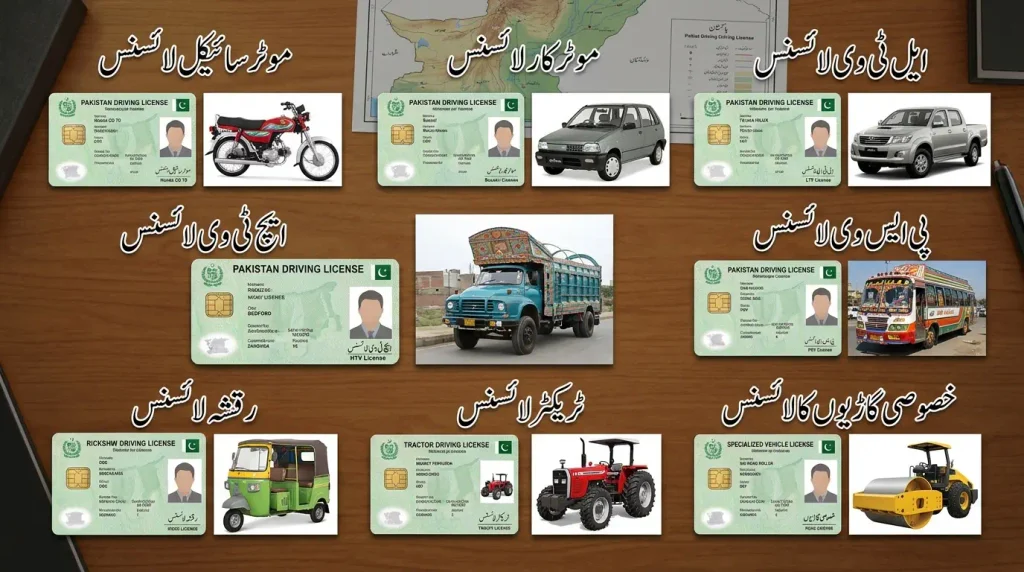
Motorcycle driving license
A motorcycle driving license is intended for the applicable motorcycle category. Motorcycles are widely used in Pakistan for commuting, education, employment, deliveries, family travel, and short-distance transportation. Because motorcycles are exposed road users, proper licensing and responsible riding are particularly important.
A motorcycle licence does not automatically mean that the holder is authorized to drive every other vehicle category. A rider who later begins driving a car or another type of vehicle should check whether a separate category or endorsement is required.
Motorcar and private vehicle license
The motorcar category is commonly associated with private cars and other applicable personal vehicles. It is important for people who drive to work, take family members to school, travel between cities, manage household activities, or use a private vehicle for everyday transportation.
The importance of the correct car category becomes clear when the driver changes from private use to commercial work. A person who has permission to operate a private car should not assume that the same authorization covers every form of passenger transportation, commercial activity, or larger transport vehicle.
LTV driving license
LTV generally refers to a Light Transport Vehicle category. It is important for drivers who operate vehicles that fall within the applicable light-transport classification, especially when driving is connected with employment or transport activity.
The exact vehicles covered by an LTV category and the conditions attached to that category can vary according to the applicable provincial rules. Drivers should therefore confirm the current classification instead of assuming that every light-looking vehicle is automatically included.
HTV driving license
HTV means Heavy Transport Vehicle. This category is important for professional drivers who operate applicable heavy vehicles such as large transport vehicles and other vehicles covered by the heavy-transport classification.
Heavy vehicles require a different level of control because their size, weight, braking distance, turning behaviour, visibility, and loading conditions can differ substantially from private cars and motorcycles. The correct HTV authorization therefore has practical importance for road safety as well as legal compliance.
Someone who intends to work as a heavy vehicle driver should verify the applicable age, learner, testing, training, endorsement, and professional requirements before beginning the application process.
PSV and passenger transport driving
PSV refers to Public Service Vehicle authorization in licensing systems where this category is used. It is important for drivers who operate vehicles used for passenger transportation under applicable public-service rules.
Passenger driving involves responsibilities that go beyond controlling the vehicle. The driver is also responsible for transporting other people safely, following applicable passenger-service requirements, and complying with the rules connected with the vehicle and route.
Depending on the province and vehicle, a professional passenger driver may need an underlying vehicle category together with the applicable PSV authorization. This is why drivers should check the exact combination required instead of assuming that an ordinary private vehicle licence is enough for passenger-service work.
Rickshaw driving license
Rickshaw licensing is important for drivers operating applicable three-wheeled vehicles, particularly where the vehicle is used for passenger transportation. Rickshaws are an important part of local transport in many Pakistani cities and towns.
A motorcycle licence should not automatically be treated as authorization to operate a passenger rickshaw. The vehicle classification, intended use, and provincial requirements should be checked before applying for or using the relevant category.
Agricultural and commercial tractor categories
Tractor categories are relevant to agricultural workers, farmers, contractors, and other people who operate tractors under the applicable rules. Agricultural use and commercial use can be treated differently, so the driver should identify the purpose for which the tractor is being operated.
This distinction is useful because a tractor used for farming may have a different operational purpose from a tractor being used in commercial transport or another business activity. The appropriate licence category should therefore be confirmed with the relevant provincial authority.
Specialized vehicle categories
Some licensing systems also recognize specialized vehicle categories such as road rollers, specialized equipment, or other vehicles that do not fit neatly into ordinary motorcycle, car, or transport classifications.
These categories are important for construction companies, road workers, infrastructure projects, agricultural operations, and specialized vehicle operators. A person who operates specialized equipment as part of a job should confirm the applicable licence classification instead of assuming that a normal car or motorcycle licence provides sufficient authorization.
Why Driving License Categories Matter for Employment
Private driving and professional driving are different
A private driver may use a car or motorcycle for personal transportation, while a professional driver may operate a vehicle for passengers, goods, deliveries, construction work, agriculture, or another business purpose. The responsibilities and vehicle characteristics can therefore be different.
This is why employers may specify a particular licence category when advertising a driving position. A company looking for a heavy vehicle driver may require an HTV category, while another position may require an LTV or passenger-service authorization.
Driving license as proof of authorization
For employment purposes, the licence category can provide useful evidence that the driver has obtained authorization for the relevant class. Employers may still need to conduct their own checks and may require additional documents, experience, medical requirements, training, or vehicle-specific qualifications.
The licence should therefore be viewed as one important part of professional driver qualification rather than as the only requirement for every job.
International Importance of Driver Licensing
Licensing as a global road-safety principle
Driver licensing is not only a Pakistani administrative concept. Around the world, licensing is used as a mechanism for establishing that drivers meet defined requirements before they are allowed to operate vehicles on public roads.
International road-traffic frameworks emphasize that driving permits should be issued after competent authorities verify the knowledge and skill required by the applicable system. This principle explains why learner stages, knowledge tests, practical tests, and vehicle categories are common features of licensing systems in many countries.
International recognition and driving abroad
International driving can involve additional documentation because a domestic driving licence is issued under the law of the driver’s home jurisdiction. International driving permits and recognition arrangements can help address situations in which a driver wants to operate a vehicle in another country.
An international driving permit is not a replacement for the underlying domestic licence. Where an international permit is required or recognized, the driver normally needs to retain a valid domestic driving licence as well. The exact recognition rules depend on the countries involved and the applicable international convention or bilateral arrangement.
Why categories are important internationally
Vehicle categories are also important internationally because a driver’s authorization needs to correspond with the type of vehicle being operated. A country may use different terminology or category codes, but the basic concept remains familiar: motorcycles, passenger cars, larger transport vehicles, buses, heavy goods vehicles, and specialized vehicles can require different qualifications.
This category-based approach helps authorities and employers understand the scope of a driver’s authorization. It also prevents the assumption that experience with one type of vehicle automatically demonstrates competence with every other type.
Driving License and Road Safety Standards
Knowledge and practical ability
A strong licensing system does not treat driving as a purely theoretical activity. Drivers need knowledge of traffic rules as well as practical ability to control the vehicle. This is why licensing systems commonly include some combination of learner education, theory or knowledge testing, practical driving assessment, and category-specific requirements.
For new drivers, the learner period can provide time to gain experience before the final licensing stage. For existing drivers moving into another category, additional testing or authorization may be required because the new vehicle can require different skills.
Licensing and vulnerable road users
International road-safety policy gives particular attention to vulnerable road users such as pedestrians, cyclists, and motorcyclists. A licensing system cannot by itself prevent every crash, but properly trained and authorized drivers are an important part of a road environment in which different road users share limited space.
This is particularly relevant in Pakistan, where motorcycles are widely used and pedestrians are present throughout urban and rural road networks. Driver awareness, speed control, safe overtaking, proper lane use, and respect for other road users remain important regardless of the licence category.
Licensing as part of a wider safety system
A driving licence should not be viewed as a guarantee that a driver will never make a mistake. Road safety depends on many factors, including driver behaviour, vehicle condition, road design, enforcement, emergency response, and the surrounding traffic environment.
The role of licensing is to establish a legal and competency framework before a person is permitted to operate a vehicle. That makes licensing one component of the wider road-safety system rather than a complete solution by itself.
Driving License for Private, Commercial, and Professional Use
Private vehicle use
For private drivers, a licence provides authorization for everyday transportation. This includes travelling to work, taking family members to school, visiting relatives, shopping, travelling between cities, and other personal activities.
Even when a vehicle is used only privately, the driver still needs to respect the applicable licence category, expiry requirements, traffic rules, and vehicle documentation requirements.
Commercial vehicle use
Commercial driving involves additional responsibility because the vehicle is being used as part of a business or transport activity. Depending on the vehicle and service, additional licensing, permit, fitness, route, or professional requirements can apply.
Drivers should therefore check the complete regulatory requirements rather than focusing only on the driving licence. The licence category is important, but commercial transport can involve several connected documents and conditions.
Professional passenger & goods driving
Professional drivers may carry passengers, goods, or equipment as part of their job. The correct licence category is important because the driver may spend many hours on the road and may operate a vehicle substantially different from a private car.
For passenger transport, the driver has responsibility for people inside the vehicle. For goods transport, the driver may also need to consider vehicle loading, dimensions, braking, and the effect of cargo on vehicle handling. These differences explain why professional licensing categories exist.
Importance of Learner Licensing and Testing
Learner Stage
The learner stage is important because it gives a new driver an opportunity to develop knowledge and practical experience before obtaining the regular licence. The exact learner period and conditions depend on the province and category.
Applicants should treat the learner stage as part of the licensing process rather than simply as paperwork. Learning traffic signs, right-of-way rules, safe turning, braking, lane discipline, parking, observation, and defensive driving can prepare a new driver for the practical test and real road conditions.
Practical driving test
The practical driving test is important because it provides an opportunity to assess how an applicant actually handles the vehicle. Knowledge of traffic rules is useful, but safe driving also requires practical control, observation, judgment, and the ability to respond appropriately to normal road situations.
For category upgrades, practical testing can become even more important because the new vehicle may behave differently from the vehicle previously driven by the applicant.
Driving License Renewal, Verification, and Upgrades
Renewal
Renewal is important because the driver’s authorization should remain valid. Drivers who regularly depend on a vehicle for work or daily travel should pay attention to the expiry date instead of waiting until the licence is urgently required.
The renewal process and available digital services can vary between provinces. Applicants should use the current provincial system and follow the latest requirements instead of relying on an old fee chart or outdated procedure.
Verification
Online verification has become an important part of modern licensing systems. A digital record can help confirm that licence information exists in the relevant government database and can reduce dependence on paper-only records.
Verification can be useful for drivers, employers, authorities, and other situations in which a person’s driving authorization needs to be checked. The exact verification method depends on the province and the current digital system.
Category upgrade & endorsement
A driving licence is an important legal document because it connects a driver with authorization to operate a particular type of vehicle. The licence category matters because different vehicles require different levels of knowledge, practical ability, responsibility, and, in some cases, additional legal requirements. A person who holds authorization for one category should not automatically assume that the same authorization covers every other type of vehicle.
What Is City Traffic Police Licence Lahore?
Lahore licensing and the role of DLIMS
In Lahore, driving licence services are connected with the provincial licensing system and the digital services used for licence-related applications and records. The licensing process is designed to identify the driver, establish the applicable vehicle category, and provide the appropriate authorization. This makes the category shown on the licence an important part of understanding what a driver is legally permitted to operate.
Driving requirements can also differ between provinces. Punjab, Sindh, Khyber Pakhtunkhwa, and Balochistan have their own licensing authorities, service arrangements, procedures, and administrative requirements. Therefore, a driver should always consider the province in which the licence is being issued or the service is being requested rather than assuming that every provincial process is identical.
Driving License Categories and Their Importance
Why the correct category matters
The correct driving licence category is important because a licence is not simply permission to drive any vehicle. It identifies the type of vehicle for which the driver has been authorized. Motorcycle, motorcar, light transport, heavy transport, passenger-service, rickshaw, tractor, and other specialized categories can involve different responsibilities and requirements.
A driver may start with one category and later need authorization for another. For example, a person who originally drives a motorcycle may later obtain a car licence, while someone with private driving experience may decide to work with a light or heavy transport vehicle.
In such cases, the driver should use the applicable upgrade or endorsement process. The additional category may require its own learner period, test, medical requirement, age condition, or other documentation depending on the province and vehicle.
Common Driving License Mistakes to Avoid
Using the wrong category
One of the most important mistakes is assuming that any driving licence covers every vehicle. A driver should check the category shown on the licence and compare it with the vehicle being operated. This is particularly important when moving from a motorcycle or private car to a transport, passenger-service, or other specialized vehicle.
Relying on old information
Licensing fees, digital services, application procedures, office arrangements, and category requirements can change. Using an old article or an outdated fee list can therefore lead to incorrect expectations. The current provincial licensing authority should be checked whenever an application is being prepared.
Ignoring licence expiry
Another common mistake is forgetting the expiry date. This can become especially inconvenient for people who depend on driving for employment. Checking the licence before it expires allows the driver to arrange renewal according to the current procedure.
Assuming commercial authorization
Private and commercial driving can have different requirements. A driver should not start professional passenger, goods, or specialized vehicle work until the applicable licensing and transport requirements have been confirmed.
How to Choose the Correct Driving License Category
Think about the actual vehicle
The vehicle itself should be the starting point. Do not select a category simply because a friend, relative, or another driver uses it. Check the applicable classification and the vehicle’s intended use before selecting a licence category.
Think about the purpose of driving
Private travel, passenger service, goods transport, agricultural work, and construction work can involve different licensing considerations. The purpose of driving should therefore be considered alongside the vehicle category.
Check the current provincial procedure
Before paying a fee or submitting an application, check the current requirements of the province in which the licence service is being requested. This is particularly important when the application involves a commercial category, an upgrade, an endorsement, or a professional driving service.
Final Thoughts
Frequently Asked Questions
A driving license is important because it connects a driver with legal authorization, vehicle categories, road-safety responsibilities, and the wider traffic management system. In Pakistan, the exact process differs between provinces, but the basic purpose remains the same: drivers should hold the appropriate authorization for the vehicles they operate.
Punjab, Sindh, Khyber Pakhtunkhwa, and Balochistan each have their own licensing structures and service arrangements. This provincial difference means that applicants should not assume that a procedure, fee, category requirement, or digital service available in one province will automatically be identical in another.
The category is equally important. Motorcycle, motorcar, LTV, HTV, PSV, rickshaw, tractor, and specialized categories exist because vehicles and driving responsibilities are not all the same. A private car driver, a motorcycle rider, a passenger driver, a heavy truck operator, and a specialized equipment operator can have very different licensing requirements.
From an international road-safety perspective, driver licensing is part of a broader system that combines authorization, knowledge, practical ability, enforcement, safer vehicles, safer roads, and responsible road-user behaviour. International recognition of driving documents can also depend on the laws and agreements applicable between countries.
For anyone applying for a driving licence or changing to another category, the most useful approach is to identify the actual vehicle, understand whether it will be used privately or professionally, and then follow the current requirements of the relevant provincial authority. Keeping the licence valid and using the correct category helps maintain proper authorization and supports a safer and more organized road environment.