
TRACS E Ticket System Sindh 2026 – Easy Complete Guide
TRACS e ticket is the electronic traffic-ticketing system introduced by Sindh Police to make traffic enforcement more digital, evidence-based and transparent. TRACS stands for Traffic Regulations & Citation System, and it is commonly described by Sindh Police as a faceless e-ticketing system because eligible traffic violations can be detected and processed through digital enforcement without requiring a traffic officer to stop every driver at the roadside.
The system is especially important for drivers in Karachi and other parts of Sindh because traffic violations recorded through the relevant camera and enforcement infrastructure can be linked with electronic tickets. Citizens can then use official Sindh Police services to review available traffic-ticket information rather than relying only on a paper challan, an SMS or an unofficial website.
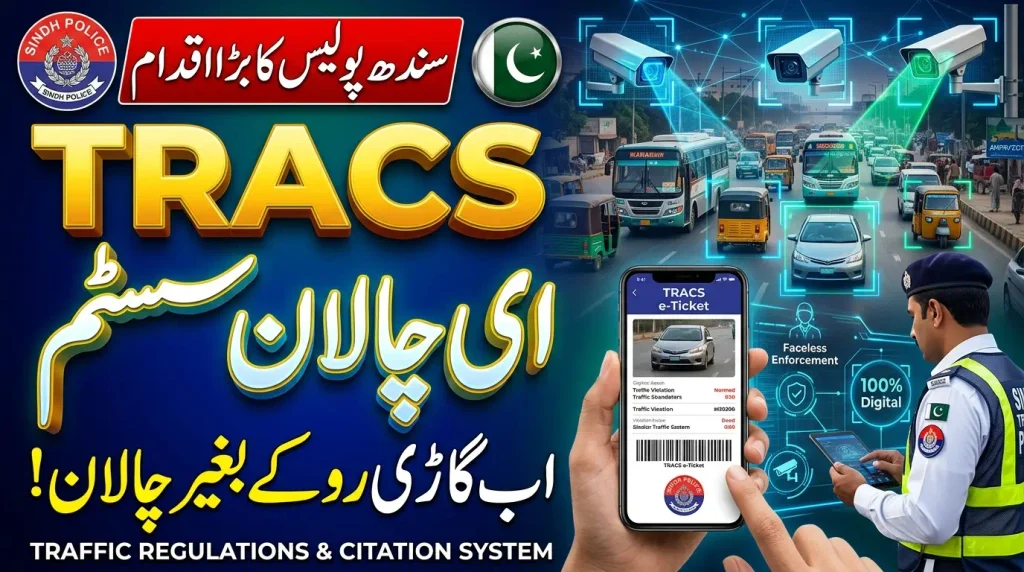
This complete tracs e ticket guide explains what TRACS is, how faceless e-ticketing works, how cameras and vehicle records are involved, how citizens can check e-tickets, what the official TRACS 4 Citizens service provides, how payment status and complaints work, what to do if a ticket appears incorrect, and how to avoid fake Sindh e-challan messages. For a broader overview of Pakistan’s regional traffic systems, you can also visit our E-Challan Checker Pakistan guide.
What Is TRACS E Ticket System?
TRACS e ticket refers to Sindh Police’s Traffic Regulations & Citation System. It is an electronic traffic enforcement and citation framework designed to record traffic violations digitally and provide citizens with a more organized way to manage traffic tickets.
The official Sindh Police description uses the term “Faceless E-Ticketing” for TRACS. The basic idea is that traffic enforcement does not always need to begin with a police officer physically stopping a vehicle and writing a ticket at the roadside. Where relevant camera-based enforcement is operating, a violation can be recorded digitally with supporting evidence and processed into an electronic citation.
This does not mean every traffic challan in Sindh is automatically generated by a camera. Traditional traffic enforcement can still exist alongside electronic systems. TRACS adds a digital enforcement channel rather than making every other traffic procedure identical.
The system is part of a wider move toward digital traffic administration. It can help authorities maintain electronic records while giving citizens better access to ticket information through official services.
What Does TRACS Stand For?
TRACS stands for Traffic Regulations & Citation System. The name reflects the system’s purpose: managing traffic-rule enforcement and electronic citations through a digital framework.
Citizens may also see terms such as TRACS Sindh Police, TRACS 4 Citizens, faceless e-ticketing, Sindh e-challan and electronic traffic ticket. These terms can relate to different parts of the wider traffic-ticketing process, but TRACS is the underlying system name used by Sindh Police.
When Was TRACS E Ticket Launched in Sindh?
Sindh Police official material states that the faceless TRACS e-ticketing system was inaugurated on 27 October 2025 at the Central Police Office Karachi with approval of the Government of Sindh.
The launch created the province-level framework for digital traffic citations, but drivers should understand that operational rollout can still happen across locations at different times. Individual districts and traffic jurisdictions can begin using the system according to local implementation schedules and infrastructure.
For example, Sindh Police public-awareness material from Tando Muhammad Khan announced the formal beginning of faceless e-ticketing there from January 2026. This demonstrates why users should not assume that every camera, road or district began operating TRACS on exactly the same day.
Current information should therefore be checked through the official Sindh Police website or the appropriate Sindh traffic authority rather than relying on an old social-media screenshot.
How Does TRACS E Ticket Work?
The tracs e ticket process can begin when an applicable traffic violation is detected through the traffic-enforcement infrastructure operating in that area. Sindh Police has publicly described violations being recorded through cameras and electronic citations being generated with evidence.
Camera-supported enforcement can help document details such as the vehicle involved, time, location and the violation that was detected. The available evidence and data can then be used by the official system to create or support an electronic traffic citation.
A major purpose of this approach is to reduce dependence on roadside interaction for every violation. Where the violation is captured electronically, the enforcement record can be handled through the digital system and made available through official citizen services.
However, drivers should not assume that every traffic camera automatically issues a challan or that every possible offence is enforced identically everywhere. Camera coverage, enforcement rules and operational systems depend on the relevant authority and location.
Why Is It Called Faceless E-Ticketing?
The term “faceless” refers to the idea that eligible electronic enforcement does not necessarily require direct face-to-face interaction between a traffic officer and the driver at the time the violation is recorded.
A camera or other authorized digital enforcement process can record the event and the resulting citation can be processed electronically. The driver or registered vehicle owner can then interact with the ticket through the relevant official system.
Faceless enforcement should not be confused with anonymous enforcement. The ticket still needs to be associated with the relevant vehicle or record through the official system.
What Is TRACS 4 Citizens?
TRACS 4 Citizens is the citizen-facing digital service associated with Sindh Police’s traffic ticketing system. Sindh Police has publicly directed citizens toward its official TRACS citizen application for viewing traffic-ticket information.
The official app information describes the service as a way to check unpaid electronic traffic tickets using a vehicle registration number and to review past and current ticket history. Users can register an account, add their vehicle information and access traffic-compliance records available through the service.
Current app information also shows continuing development of the service. Features listed in recent updates include checking whether a challan is paid or unpaid, submitting a complaint and requesting a first-time deferment where the service makes that option available.
Because app features can change, users should always rely on the current version obtained through the route recommended by Sindh Police rather than an unofficial APK or copied application.
What Can Citizens View?
The citizen service is designed to make available traffic-ticket information easier to review. Depending on the current service and the records associated with the user’s account or vehicle, this can include unpaid tickets, ticket history and payment status.
Citizens should review each ticket individually rather than assuming that a single status represents every traffic record linked with the vehicle.
How to Check a TRACS E Ticket
To check a tracs e ticket, begin with an official Sindh Police service rather than entering your registration number into an unknown third-party website. Sindh Police has directed citizens toward its TRACS citizen application for viewing electronic traffic-ticket information.
The official service information states that unpaid traffic violations can be checked using a vehicle registration number. The citizen application also allows users to register and add vehicle information so ticket history can be managed within the service.
Enter the vehicle information carefully and make sure the registration number corresponds with the correct vehicle. When a ticket appears, review the available details before deciding what action to take.
If you simply want to understand which official traffic service applies in Pakistan, you can also start from our regional e-challan guide. The actual Sindh ticket should still be verified through the official Sindh Police service.
Check the Vehicle Registration Number
The registration number is a key identifier in the TRACS citizen service. Enter it exactly as associated with the vehicle record rather than relying on an approximate spelling or memory.
If a ticket does not appear, recheck the registration details before assuming that no electronic traffic citation exists. Also remember that a ticket issued by another authority may not belong in the Sindh TRACS environment.
TRACS E Ticket in Karachi
Karachi is one of the most important areas for TRACS because of the city’s large vehicle population and extensive traffic network. Sindh Police and Karachi Traffic Police have published public information about the electronic challan system and TRACS citizen services.
Karachi drivers should use the official Traffic Police Karachi service or Sindh Police’s recognized TRACS citizen route when they need current traffic-ticket information.
Drivers should not assume that every camera in Karachi has exactly the same role. Some cameras may support traffic management, security or monitoring, while electronic enforcement depends on the infrastructure and rules being used by the responsible authority.
If an electronic ticket appears against your vehicle, review its available violation information and status before paying or filing a complaint.
Does TRACS Work Outside Karachi?
TRACS was launched as a Sindh traffic-enforcement initiative rather than a Karachi-only name. Official Sindh Police material refers to the system as having been launched in Sindh Province, and district-level public notices have also announced faceless e-ticketing implementation outside Karachi.
However, implementation and camera-based enforcement should not be assumed to be identical on every road in every district. Rollout can depend on local infrastructure, enforcement operations and the current configuration of the traffic system.
This means a driver should check current information for the location where the suspected violation occurred rather than assuming that province-wide launch means every road is monitored in exactly the same way.
The official Sindh Police website remains the safest reference point for major announcements about expansion or changes to the electronic ticketing system.
What Traffic Violations Can TRACS Record?
TRACS is intended for traffic-law enforcement, so the electronic ticket should identify the particular violation associated with the citation. Drivers should rely on the actual ticket and current Sindh traffic rules rather than assuming that every offence is enforced electronically everywhere.
Camera-supported traffic systems may be used for violations that can be documented through traffic-monitoring infrastructure. Sindh Police public-awareness material emphasizes that traffic violations can be recorded through cameras and accompanied by evidence in the electronic challan process.
The exact offence, evidence and applicable fine shown on the official ticket matter more than a generic list from a third-party website. Fine schedules and enforcement practices can change.
Therefore, this guide does not provide a fixed table claiming that every violation always carries the same amount. Check the official electronic ticket for the current violation and amount associated with your record.
Does Every Camera Issue an E-Ticket?
No such assumption should be made. A camera being present does not automatically prove that it is being used for a particular TRACS enforcement function.
Traffic infrastructure can serve different monitoring, safety and enforcement purposes. A genuine electronic ticket should be confirmed through the official system rather than guessed from the presence of a roadside camera.
TRACS E Ticket vs Manual Challan
A tracs e ticket and a traditional manual challan both relate to traffic enforcement, but the way they are generated and managed can differ. TRACS is built around digital records and electronic traffic-ticketing, while a manual challan can begin through direct roadside enforcement by an officer.
A camera-based electronic citation can have digital evidence associated with the recorded event. A manual ticket may rely more heavily on the officer’s observation and the information documented at the roadside.
The checking process can also differ. TRACS citizens can use official digital services to view available electronic tickets, whereas a manual ticket may need to be handled according to the instructions printed or issued by the traffic authority.
For a more detailed comparison, read our E-Challan vs Manual Challan guide.
How to Review TRACS Ticket Evidence
If an electronic ticket appears against your vehicle, review the information available with the record carefully. Do not assume that a ticket is correct merely because it was generated electronically.
Check the vehicle registration information, violation, date, time, location and available supporting evidence. If an image or other evidence is provided, compare it with your vehicle and circumstances.
Electronic systems can still require correction if vehicle information, number-plate interpretation or another record is wrong. The correct response to a possible error is to use the official complaint or review procedure rather than ignoring the ticket.
Keep screenshots or reference information where appropriate if you need to raise a genuine complaint. Avoid publicly sharing unredacted documents containing private information.
What If a TRACS E Ticket Is Wrong?
If you believe a tracs e ticket has been issued incorrectly, do not rush to pay simply to make the record disappear. First review the ticket and available evidence carefully.
Check whether the number plate belongs to your vehicle, whether the vehicle shown appears to be yours, and whether the time and location make sense. A similar registration plate, ownership-record issue or another data problem can require review.
The current TRACS citizen service information includes a complaint feature, which gives users a digital route for raising issues through the official environment. Follow the current complaint workflow shown by the service and provide only genuine supporting information.
Do not pay a private person who claims they can remove or delete an electronic traffic ticket from the police database. Corrections and complaints should go through the responsible official authority.
Complaint and Review Options
Use the complaint feature or other review method currently provided by the official TRACS service. The available options can change as the system is updated.
Keep the ticket reference and any relevant evidence until the issue has been resolved. Do not delete the record simply because you have submitted a complaint.
What Is First-Time Deferment in TRACS?
Recent official TRACS 4 Citizens app information lists an option to request a first-time deferment, sometimes described in the app update wording as a waiver-related feature. Users should follow the exact current conditions displayed by the official service rather than assuming every first ticket is automatically cancelled.
The presence of a request option does not mean that every ticket qualifies or that approval is guaranteed. Eligibility, conditions and the final decision depend on the official TRACS procedure.
If the option appears for an eligible user, read the current instructions carefully before submitting the request. Do not rely on social-media claims that promise a guaranteed waiver.
If the feature or wording changes in a later version of the service, the current Sindh Police system should take priority over older guides.
How to Check TRACS Ticket Payment Status
The current citizen-service information lists the ability to check whether a challan is paid or unpaid. This is useful after making a payment because the driver can review the ticket status rather than depending only on memory or an SMS.
If a payment has been completed but the electronic ticket still appears unpaid, first check whether the transaction actually succeeded. A pending, failed or reversed payment should not be confused with a completed transaction.
Keep the payment receipt, transaction reference and relevant ticket information. If the financial transaction is successful but the official status remains incorrect, use the support or complaint route provided by the authority.
Do not immediately make the same payment a second time merely because the status has not changed as expected. Confirm what happened to the first transaction before paying again.
How to Pay a TRACS E Ticket
When a valid traffic ticket is shown through the official TRACS environment, follow the payment method currently provided for that citation. Payment channels and interfaces can change, so the official ticket and Sindh Police service should be treated as the final instructions.
Before payment, review the vehicle, violation, amount and ticket information. This helps prevent accidental payment against the wrong record.
Do not transfer money to a private bank or wallet account simply because someone claims to be a traffic officer or challan agent. A genuine electronic traffic ticket should be handled through the recognized official payment process.
After payment, save the receipt and transaction reference. Keep these records until the official ticket status reflects the completed payment and any related issue has been resolved.
Why a TRACS E Ticket May Not Appear
A missing electronic ticket does not always mean that no traffic record exists. One possible reason is an incorrect vehicle registration number. Recheck the letters and digits before searching again.
The suspected violation may also belong to another traffic authority. A Punjab Safe City ticket, Islamabad challan, KP traffic ticket or NHMP motorway ticket should not automatically be expected in Sindh’s TRACS system.
A recent enforcement event may also require processing before the citizen-facing record becomes available. If you have received genuine official information about a ticket, keep it and use the official Sindh Police service for clarification.
Do not respond to a missing result by entering CNIC images, banking details or other private information into random online “challan checkers.”
Check the Correct Authority
The location and issuing authority are important. A Sindh TRACS ticket should be checked through Sindh services, while a challan belonging to another jurisdiction should be checked through that authority.
Pakistan’s digital traffic systems are not one identical nationwide database, so checking the correct jurisdiction is essential.
TRACS and Vehicle Ownership Records
Sindh Police has informed citizens that after completing registration in the TRACS citizen service, they can view vehicles associated with their CNIC along with traffic violations and e-challan tickets available through the system.
This makes accurate vehicle ownership information important. If a vehicle has been sold but official ownership records have not been properly updated, traffic and administrative records can become confusing.
Buyers and sellers should complete the proper vehicle-transfer process through the relevant Excise authority rather than relying only on a private sale agreement.
A TRACS ticket check can be useful for understanding available traffic records, but it is not a replacement for complete vehicle ownership and registration verification.
TRACS E Ticket Before Buying a Used Vehicle
Checking available traffic records can be useful when buying a used car or motorcycle. If the registered owner has outstanding electronic tickets, it is better to understand the situation before completing the vehicle transfer.
Where the official citizen system requires the registered owner’s account or information, ask the legitimate owner to participate in the verification rather than trying to obtain private identity details through unofficial means.
If an unpaid ticket appears, discuss it with the seller and determine how the record should be resolved through the official process before ownership transfer.
Traffic-ticket checking should still be combined with Sindh Excise ownership, registration and tax verification where relevant. A clean TRACS record by itself does not prove that every vehicle document is complete.
How to Avoid Fake TRACS E Ticket Messages
Electronic traffic systems can be copied by scammers in fake messages. A fraudulent SMS may mention a traffic violation, use police-style language and include a link that appears urgent.
Do not assume the message is genuine simply because it mentions TRACS, Sindh Police, an e-challan or your city. Open the official Sindh Police service independently and check whether a genuine electronic ticket exists.
Never share an ATM PIN, card CVV, banking password or OTP with anyone who claims these details are required to check or cancel a traffic ticket.
Also avoid unofficial applications downloaded from random websites. Sindh Police has an official citizen service, so there is no reason to install an unknown APK claiming to provide private access to police traffic records.
Verify First, Pay Second
This is the safest rule for any electronic traffic message. First confirm the ticket through the official service. Then review the record and use only the payment process recognized by the responsible authority.
An SMS notification by itself is not a substitute for checking the actual electronic traffic record.
Common TRACS E Ticket Mistakes
One common mistake is assuming that TRACS is a nationwide Pakistan challan system. It is associated with Sindh Police, while Punjab, Islamabad, Khyber Pakhtunkhwa and NHMP use their own traffic services.
Another mistake is using an unofficial checker simply because it appears in search results. The real traffic record should be confirmed through the Sindh Police system.
Entering the wrong registration number is another common problem. Always check the plate or registration information against the official vehicle record when possible.
Some users also assume that an electronic ticket cannot contain an error. Digital records should still be reviewed, and the official complaint process should be used if important details do not match.
Finally, do not forget the payment receipt. Keep the ticket and payment evidence together until the ticket is shown as resolved through the official system.
TRACS E Ticket Frequently Asked Questions
Final Thoughts
TRACS e ticket is Sindh Police’s digital traffic citation system built around the Traffic Regulations & Citation System framework. Its faceless e-ticketing approach allows eligible traffic violations to be recorded and processed digitally without requiring every case to begin with a roadside interaction between an officer and driver.
The system was officially launched in Sindh in October 2025, while operational rollout can vary by location. Citizens can use the official TRACS citizen service to access available electronic traffic-ticket information, review ticket history and check payment status. Current service information also includes complaint and first-time deferment request features.
If a ticket appears against your vehicle, check the registration details, violation information, date, location and available evidence before paying. If something appears wrong, use the official complaint process rather than a private agent. If you pay a genuine ticket, keep the transaction receipt until the official status is updated correctly.
Most importantly, use the official Sindh Police and Traffic Police Karachi services for current information. For broader Pakistan e-challan guidance and links to the correct regional authorities, visit EChallanChecker.online, an independent informational website that does not issue or cancel government traffic tickets.