
Lahore Traffic Challan Check Online 2026 – E-Challan Guide
Checking a lahore traffic challan online can help vehicle owners review traffic violations, verify challan details, and understand the payment process. A proper online check also helps you confirm the vehicle information before taking any further action.
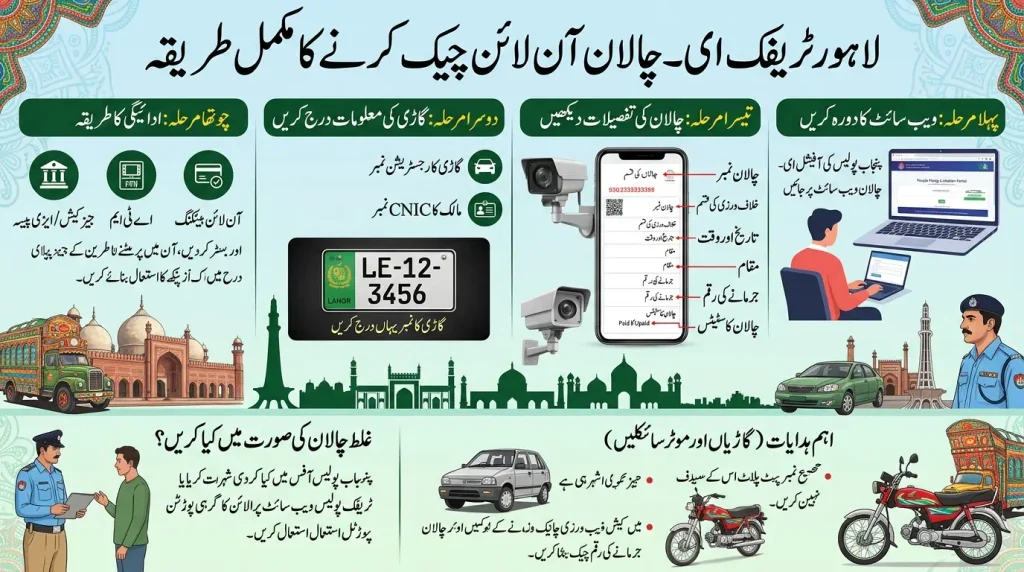
This guide explains how lahore traffic challan checking works, what information you may need, how to understand an electronic challan, what to check before payment, and what steps to consider if the information appears incorrect. It also covers unpaid challans, number plate issues, payment problems, motorcycles, cars, commercial vehicles, and common questions about Lahore e-challans.
What Is a Lahore Traffic Challan?
Understanding a Traffic Challan
A traffic challan is a record connected with a traffic violation. In Lahore, enforcement can involve traditional traffic policing as well as electronic systems. An electronic challan, commonly called an e-challan, records information about an alleged violation and the vehicle involved. Depending on the enforcement method, the record may be generated after a camera-based system detects a violation or through other traffic enforcement activity. The purpose of checking the record is to understand what violation has been recorded and what action is required.
Why Lahore Uses Electronic Traffic Enforcement
Electronic enforcement allows traffic violations to be recorded through monitoring technology instead of depending only on an officer stopping a vehicle. The Punjab Safe Cities Authority traffic management system includes an electronic challan system and camera-based monitoring. This approach can record certain violations when the relevant system detects them. As a result, a driver may discover a challan even when no officer stopped the vehicle at the time of the incident. Regularly checking the official record can therefore be useful for vehicle owners who want to keep track of outstanding traffic matters.
Lahore Traffic Challan Check Online
Information Needed for an Online Check
To check a Lahore traffic challan online, you need accurate vehicle information. The current PSCA e-challan search interface provides a field for the vehicle plate number and asks for either the CNIC or chassis number. Entering the details exactly as required can prevent unnecessary search problems. Plate numbers may be displayed in different formats, so use the format accepted by the current search page. If you are checking someone else’s vehicle, make sure you have permission to use the required personal or vehicle information.
Steps for Checking the Record
Start by opening the official e-challan verification service used for Punjab traffic records. Enter the vehicle plate number in the required field. Next, provide either the CNIC or chassis number requested by the system. Submit the information and wait for the result to load. If a record is available, carefully review the information shown on the screen. Do not make a payment simply because a result appears. First confirm that the vehicle information, violation information, date, and amount shown on the record are consistent with the situation you are checking.
Lahore Traffic Challan Check by Plate Number
Entering the Vehicle Plate Number
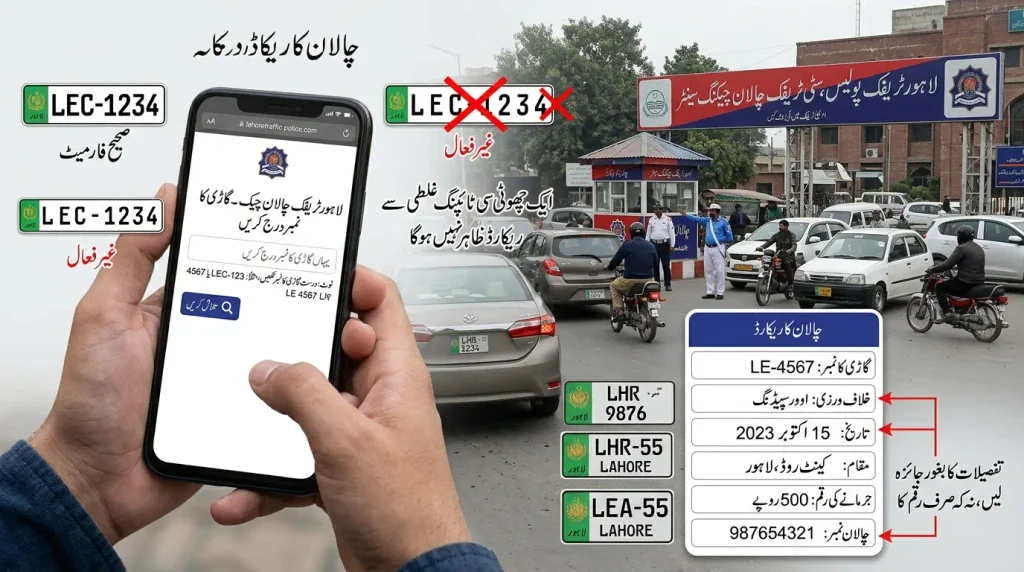
The vehicle plate number is one of the main pieces of information used during an online Lahore traffic challan search. The official search page shows examples of acceptable plate formats, including combinations with spaces and hyphens. The exact format should follow the current instructions displayed on the search interface. A small typing mistake can prevent the record from appearing even when a challan exists. Check each letter and number before submitting the search. If the plate has recently changed, also consider whether the record may still be connected with an earlier registration or vehicle record.
Reviewing the Search Result
When the search returns a challan record, review every available detail rather than looking only at the fine amount. Check the vehicle plate, violation description, date, location, and any available ticket or reference information. These details help you understand why the record was created. If several challans are listed, review them separately because each entry can relate to a different event. Keeping a clear record of paid and unpaid entries can also make future vehicle transactions easier. Always use the information displayed by the official system instead of relying on screenshots or messages from unknown sources.
Lahore Traffic Challan Check by CNIC or Chassis Number
Using CNIC for Verification
The current e-challan verification interface allows a CNIC to be used along with the vehicle plate number. The CNIC field is intended to provide an additional identity-related check during the search. Enter the required digits carefully and avoid unnecessary spaces or characters if the system does not request them. Because a CNIC is sensitive personal information, use it only on the official verification service. Do not enter your CNIC into random websites, forms, social media messages, or links received from unknown people. If the search fails, recheck the vehicle number and CNIC before assuming that no record exists.
Using the Chassis Number
A chassis number provides another way to complete the verification process when the current search interface requests it. This can be useful when you need to identify the vehicle through its registration information and the chassis details available in the vehicle documents. Enter the number exactly as recorded and check similar-looking characters carefully. If the result does not appear, review the information again before trying repeatedly. The chassis number should be treated as private vehicle information. Avoid posting the complete number publicly because unnecessary sharing of registration details can create privacy and security concerns.
Lahore Traffic Challan Payment Online
Check the Challan Before Paying
Before paying a Lahore traffic challan, review the complete record first. Confirm that the vehicle plate number belongs to the vehicle you are checking. Read the violation description and review the recorded date and location if those details are available. Also check the amount displayed by the current system. Traffic fine amounts can vary according to the violation and applicable rules, so an old amount found elsewhere should not be treated as the current amount. The official record shown during the payment process should be your reference for the amount that is actually due.
Keep Payment Confirmation
After completing an online payment, keep the confirmation or transaction information provided by the payment system. A screenshot or saved receipt can be useful until the challan status is updated. Payment records are especially important when the amount has been deducted from your bank account or payment method but the challan still appears as unpaid. Do not immediately make another payment simply because the status has not changed. First confirm whether the original transaction was successful and allow the relevant system enough time to reflect the payment.
Lahore Traffic Challan Fine and Violations
Common Violations Recorded in Lahore
Lahore traffic enforcement can cover several types of road violations. The Punjab Safe Cities Authority traffic management system describes electronic detection for violations such as red-light or signal violations, wrong lane or wrong turn situations, one-way violations, and line, lane, or zebra-crossing violations. Other traffic offences may also be dealt with through traffic enforcement. The exact violation shown on an individual challan should always be read from the record itself. Avoid assuming the reason for a challan based only on the amount or on a general description of traffic rules.
Why Fine Amounts Can Be Different
A Lahore traffic fine is not necessarily the same for every traffic violation. The amount can depend on the applicable traffic rules, the type of offence, and the vehicle category or circumstances involved. For this reason, websites or social media posts showing old fine schedules should be treated carefully. The amount displayed in the current official challan record is more relevant to a specific case. Before payment, compare the violation description with the amount shown in the record. If something appears inconsistent, review the information first rather than relying on an unofficial list of fines.
How the Lahore E-Challan Camera System Works
Camera-Based Traffic Monitoring
Camera-based traffic monitoring is designed to observe traffic activity and identify specific violations through automated systems. The Punjab Safe Cities Authority has described its electronic challan system as working with traffic monitoring technologies, including automatic number plate recognition and red-light monitoring systems. When a system detects a supported violation, the relevant vehicle information can be associated with an electronic traffic record. This means the enforcement process does not always require an officer to stop the driver at the roadside. The resulting record can then be checked through the applicable electronic verification system.
Traffic Violations That May Be Detected
Electronic traffic systems can identify certain road violations that occur within the monitored area. Examples described by the Lahore traffic management system include crossing a red light, using an incorrect lane, making a wrong turn, travelling against a one-way restriction, or crossing designated lines and zebra crossings. Detection depends on the technology and enforcement coverage available at a particular location. Therefore, a driver should not assume that every type of violation is detected in exactly the same way. The individual challan record remains the appropriate place to understand the specific violation recorded against a vehicle.
Lahore Traffic Challan Status
Understanding an Outstanding Challan
An outstanding traffic challan means the record still shows an amount or enforcement matter that has not been cleared in the system. If several challans appear, each record should be reviewed individually. A vehicle owner should keep track of which entries have been paid and which remain outstanding. This is particularly useful when a vehicle is being transferred, sold, or otherwise processed. The PSCA also provides information about vehicle blacklisting and notes that multiple unpaid e-challans can be among the reasons a vehicle may be blacklisted. Clearing legitimate outstanding dues can therefore help keep vehicle records in order.
Checking the Status After Payment
After paying a Lahore traffic challan, the record may not always change immediately. Keep the payment reference, receipt, or confirmation available while waiting for the system to update. If the challan remains visible after payment, first compare the payment details with the challan details. Make sure the vehicle number and transaction information match. If money was deducted but the payment result is unclear, avoid making a second payment without checking the first transaction. A delayed status does not automatically mean that the original payment failed. The correct response depends on the payment confirmation and the current status of the official record.
Lahore Traffic Challan Not Showing Online
Check the Entered Information Again
If a Lahore traffic challan does not appear during an online search, begin by checking the information you entered. Confirm every letter and number in the plate number. Then verify the CNIC or chassis number. A single incorrect digit can prevent a matching record from appearing. Also make sure you are using the current official verification system and not an outdated page or unofficial service. If the violation was very recent, the record may also require time to appear in the relevant system. A failed search should therefore not automatically be interpreted as proof that no challan exists.
Recent Violations and System Updates
A newly generated traffic record may not become visible at exactly the same moment as the incident. Electronic systems require the violation information to be processed and associated with the relevant vehicle record. This is one reason a driver should not rely only on an immediate online search after a traffic incident. If you believe a violation may have occurred, checking again later through the official system can provide a more complete result. At the same time, avoid repeated searches through unofficial websites that request unnecessary personal information. Use the official verification process whenever you need to check a Lahore traffic challan.
Lahore Traffic Challan Wrong or Incorrect
Review the Vehicle and Violation Details
If a Lahore traffic challan appears to be incorrect, begin by checking the complete information in the record. Compare the plate number with your vehicle, then review the recorded date, location, and violation description. If an image or evidence is provided through the applicable system, review that information as well. Sometimes a driver may misunderstand a violation because another person was using the vehicle at the time. In other situations, the concern may involve the vehicle number itself. The first step is to identify exactly which part of the record appears incorrect before submitting any complaint or seeking correction.
When a Challan May Need Further Review
A discrepancy deserves closer attention when the vehicle information does not match, the recorded location appears inconsistent, the violation description does not fit the available circumstances, or the same vehicle appears connected with information that you believe belongs to another vehicle. Keep relevant documents and screenshots that help explain the issue. Do not alter or edit evidence before saving it. Clear records can make a complaint easier to explain. If the official system provides a complaint or correction process, use the information requested there and describe the problem accurately instead of submitting repeated complaints without supporting details.
Lahore Traffic Challan Dispute and Complaint
When to Question a Traffic Record
A complaint or dispute may be relevant when the vehicle information is incorrect, the record appears to involve another vehicle, or other details conflict with the information available to you. Before submitting a complaint, collect the challan reference, vehicle registration details, date, location, and any supporting information that can explain the issue. A clear explanation is more useful than a general statement that the challan is wrong. If the official system offers a specific procedure for complaints, follow that process and provide the requested information in the required format.
Information to Keep for a Complaint
Keep a copy of the challan details before starting a complaint. Useful information can include the vehicle plate number, challan or ticket reference, date of the violation, location, violation type, and any available evidence. If the concern relates to payment, also keep the transaction reference and payment confirmation. These details help separate a traffic violation dispute from a payment problem. Make sure the information you submit is accurate and complete. Avoid sending your CNIC, chassis number, banking information, or other sensitive details to people who claim they can remove a challan through unofficial channels.
Lahore Traffic Challan Payment Problems
Payment Failed but Money Was Deducted
One of the most confusing payment situations occurs when money is deducted but the challan status does not change. In this situation, keep the transaction reference, date, amount, and payment method information. Do not immediately repeat the payment. First determine whether the transaction was successful, pending, reversed, or failed. A banking transaction and a traffic system status may not update at exactly the same time. If the amount is later reversed, the payment may need to be completed again through the proper process. Keep all records until the challan status and payment account are clear.
No Payment Confirmation Appears
If a payment appears to have completed but you did not receive clear confirmation, check the payment account first. Look for the transaction reference and confirm whether the amount was actually charged. Then review the challan status again through the official system. If the status remains unchanged, keep the transaction details ready when contacting the relevant payment or traffic service. Avoid sharing complete banking credentials, card numbers, passwords, or verification codes with anyone who offers to update the challan manually. A legitimate payment issue should be handled through the appropriate official support or transaction process.
Lahore Traffic Challan for Cars
Checking a Car Traffic Challan
Car owners should check the vehicle record regularly, particularly when a car is used by more than one driver. A traffic violation can occur while another person is driving the vehicle, but the electronic record can still be connected with the registered vehicle. A regular lahore traffic challan check helps the owner identify outstanding records before they become an unexpected issue. When reviewing a car challan, focus on the registration number, violation date, location, and offence description. If the information appears correct, follow the current payment process shown by the official system.
Check Before Buying or Selling a Car
Traffic challan records can also matter when a car is being sold or purchased. A buyer should review the vehicle information and ask for relevant records before completing a transaction. The seller can also check the record and resolve legitimate outstanding matters before transferring ownership. This reduces confusion later if an old challan is discovered. Vehicle owners should keep payment receipts and transaction records after clearing dues. A simple online check can therefore become part of a wider vehicle verification process. It is useful to confirm not only the vehicle’s physical condition and documents but also any outstanding traffic-related record.
Lahore Traffic Challan for Motorcycles
Motorcycle Challan Checking
Motorcycle owners can use the same general electronic verification approach when checking an applicable Lahore traffic challan. The registration plate should be entered carefully because motorcycle plates can be difficult to read or type if the format is entered incorrectly. Review the record for the correct vehicle before taking action. Motorcycle traffic enforcement can include violations associated with signals, lanes, road markings, and other applicable traffic rules. If a record appears against the wrong registration, compare the plate and other vehicle information before submitting a complaint. Keep the motorcycle registration documents available when you need to verify ownership details.
Number Plate and Helmet-Related Concerns
Motorcycle riders should pay attention to number plate visibility and other basic traffic requirements. A plate that is unclear, altered, covered, or difficult for a camera system to read can create additional problems. Helmet-related traffic requirements should also be followed according to the applicable rules. If a challan is connected with a number plate issue, review the exact description rather than assuming the reason from a general message. Where a motorcycle is regularly used by different family members or employees, owners should explain basic traffic requirements to all riders. This can reduce avoidable violations and help keep the vehicle record clear.
Lahore Traffic Challan for Commercial Vehicles
Why Commercial Vehicles Need Regular Checks
Commercial vehicle owners and operators may need to pay closer attention to traffic records because vehicles can be driven by multiple people and may spend long hours on busy roads. A missed traffic record can become harder to track when several drivers use the same vehicle. Regular Lahore traffic challan checks can help fleet owners identify violations and maintain clearer vehicle records. Businesses can keep a simple internal record containing the vehicle number, driver, date, and payment status. This does not replace the official traffic system, but it can make it easier to identify which vehicle requires attention and whether a previous challan has already been resolved.
Keep Driver and Vehicle Records Organized
When a commercial vehicle is shared among drivers, the owner should keep basic records about who used the vehicle and when. This can help identify the circumstances surrounding a traffic violation. A fleet manager can also review outstanding challans periodically and keep payment confirmations in an organized file. Such records are especially useful if the same vehicle receives multiple traffic notices. The goal is not to avoid legitimate enforcement but to make sure every traffic matter is reviewed and resolved correctly. Clear records also reduce confusion when a company changes drivers, sells a vehicle, renews documents, or transfers responsibility for a vehicle.
Lahore Traffic Challan and Number Plate Issues
Incorrect or Unclear Plate Information
Number plate information is important because electronic systems use vehicle identification data to associate a traffic event with a registration record. If a plate is damaged, unclear, covered, altered, or otherwise difficult to identify, problems can arise. When checking a Lahore traffic challan, compare the registration number shown in the record with the actual vehicle and official documents. If there is a mismatch, save the details and investigate the issue before paying. A plate-related concern can be different from a normal traffic violation, so the exact wording of the challan should be reviewed carefully.
Fake, Cloned, or Tampered Plates
Fake, cloned, or tampered number plates can create serious registration and enforcement problems. A cloned plate may cause a traffic record to appear against a vehicle owner even when the actual vehicle was somewhere else. If you believe a challan is connected with a cloned or incorrect plate, collect evidence showing the vehicle identity and relevant circumstances. The PSCA provides information about vehicle blacklisting that also addresses issues involving cloned, fake, or tampered plates. Such cases should be handled through the appropriate official process because simply ignoring the challan does not resolve the underlying vehicle record problem.
Lahore Traffic Challan and Unpaid Dues
Why Outstanding Challans Matter
Leaving legitimate traffic challans unpaid can create problems later, particularly when multiple records accumulate. The PSCA’s information about vehicle blacklisting states that multiple unpaid e-challans can be one of the reasons associated with blacklisting. This makes regular checking useful even when a vehicle owner has not recently received a notification. An owner can review the current record, identify unpaid entries, and deal with them through the applicable process. If a challan appears incorrect, the owner should review the dispute or complaint route rather than simply allowing the record to remain unresolved.
Check Challans Before Vehicle Transactions
Checking traffic records before selling or purchasing a vehicle can reduce future confusion. A buyer should confirm that the vehicle registration information is consistent and ask whether outstanding traffic matters exist. A seller can perform a Lahore traffic challan check before completing a transaction and keep evidence of any payments made. This is particularly useful when a vehicle has had multiple drivers over time. A clean record does not replace other vehicle verification steps, but it adds another useful check. Always distinguish between a traffic challan, registration matter, tax issue, and other vehicle-related obligations because different authorities may manage different records.
Lahore Traffic Challan SMS and Notifications
Why You May Not Receive a Message
Not receiving an SMS should not be treated as the only proof that a vehicle has no traffic challan. Notification delivery can depend on the information available in the relevant system and the communication method being used. A driver may also miss a message because of a changed phone number, network issue, delayed notification, or another communication problem. The safer approach is to verify the vehicle record through the current official e-challan service. This is particularly important before selling a vehicle, completing an important transaction, or assuming that an old traffic matter has been cleared.
Use Official Verification Instead of Random Links
Traffic challan messages can be copied or misused by scammers, so users should be careful with unexpected payment requests. Do not assume that a message is genuine simply because it contains a vehicle number, challan language, or a payment request. Avoid entering CNIC information, chassis numbers, banking details, passwords, or verification codes into unknown websites. Instead, open the official traffic verification service yourself and check the vehicle record there. This simple habit reduces the risk of providing personal information to an unauthorized website. A legitimate traffic record should be verified through the appropriate official system before payment.
Lahore Traffic Challan Safety Tips
Protect Your CNIC and Vehicle Information
A Lahore traffic challan search may require personal or vehicle information, so privacy matters. Use the official verification page and avoid sharing your complete CNIC or chassis number publicly. Do not send screenshots containing sensitive information to unknown people. When discussing a challan online, hide personal numbers that are not necessary for the conversation. Payment information requires even greater care. Banks and official services should never require you to disclose a password, PIN, or one-time verification code to a stranger. Treat unexpected calls or messages offering instant challan cancellation as suspicious and verify everything through the appropriate official channel.
Recognizing Suspicious Payment Requests
A suspicious challan payment request may ask you to transfer money to a personal account, provide a banking password, share a one-time code, or install an unknown application. Such requests should not be treated as normal traffic payment instructions. Verify the challan independently through the official system before doing anything. If the official record does not match the message, stop and investigate. A genuine traffic challan should have identifiable vehicle and violation information. Taking a few extra minutes to verify the record can prevent the much larger problem of losing money or exposing personal information.
Lahore Traffic Challan Quick Check Before Payment
Confirm the Vehicle Information
Before payment, confirm that the challan belongs to the correct vehicle. Compare the displayed plate number with the registration documents and the physical vehicle. If the record contains other identifying information, review that as well. This is especially important for vehicles with similar registration numbers or cases involving multiple family vehicles. Do not rush because a message says that immediate payment is required. First verify the record independently. A correct vehicle match is the foundation of a proper challan payment because paying the wrong record can create another problem that requires additional correction.
Review Violation, Date, Location, and Amount
Next, read the actual violation description and review the date and location shown in the record. These details provide context and help you understand the reason for the challan. Finally, review the amount currently displayed by the official system. Do not rely on an old fine chart because traffic rules and amounts can change. If all the information matches, keep the payment confirmation after completing the transaction. If something does not match, stop and review the issue before paying. This simple check can prevent mistakes and provides a clear record if you later need to ask about the challan.
Lahore Traffic Challan Step-by-Step Checklist
Before You Check the Challan
Keep your vehicle plate number available before starting the search. If the current system asks for a CNIC or chassis number, keep the correct information ready as well. Use the official verification service and enter the details carefully. Check the result rather than assuming that a failed search means there is no challan. If multiple records appear, review each one individually. Note the violation, date, location, amount, and status. When a record looks incorrect, save the relevant details before taking further action. This process creates a simple and repeatable method for checking your vehicle without relying on unofficial information.
After Checking or Paying
After checking a Lahore traffic challan, save the information you may need later. If the challan is unpaid and valid, follow the current payment process. If you pay it, keep the receipt or transaction reference. If the payment is pending, keep the transaction details until the status becomes clear. If the record appears incorrect, save the relevant evidence before submitting a complaint. For vehicle owners, periodic checks are useful because they reduce the chance of discovering several outstanding records at once. A simple folder containing payment confirmations and important vehicle records can make future verification much easier.
Lahore Traffic Challan FAQs
Final Thoughts
A lahore traffic challan can be checked more confidently when you use the current official verification process and review the complete record before taking action. The current PSCA e-challan system provides online verification using the vehicle plate number together with either a CNIC or chassis number. Lahore’s electronic traffic management system also uses camera-based enforcement for certain violations.
The most important habit is to verify the vehicle information, violation, date, location, status, and amount before payment. If the record appears incorrect, keep the relevant evidence and follow the applicable complaint process. If payment is completed, retain the confirmation until the status is updated. Vehicle owners should also check outstanding records periodically, particularly before buying, selling, or transferring a vehicle.
By following these steps, drivers can better understand their Lahore e-challan records, avoid common verification mistakes, protect their personal information, and keep useful payment records. Always rely on the current official system for the latest challan status and payment information because traffic procedures, system features, and applicable amounts can change over time.