
License Renewal and Unpaid Traffic Challan; Best Guide 2026
Whether an unpaid traffic challan affects your Unpaid Traffic Challan and License Renewal in Pakistan depends on the province, licensing authority, and the current rules being followed by that authority. There is no single procedure that applies to every driver across the country.
If you have an outstanding traffic fine, it is a good idea to check its status before starting your license renewal process. In some situations, the relevant authority may verify outstanding traffic records before completing a licensing or vehicle-related service. In other cases, an unpaid challan may not directly prevent renewal.
This guide explains how unpaid challans can relate to driving license renewal in Punjab, Islamabad, Sindh, Khyber Pakhtunkhwa (KP), and Balochistan. It also covers the situations in which old unpaid challans may be discovered, what documents are commonly needed for renewal, how to check pending challans, and what you should do after paying an outstanding fine.
The most important point is that traffic and licensing systems can change over time. Before applying for renewal, always confirm the current requirements with the relevant traffic or licensing authority.
How Traffic Challans and License Renewal Are Becoming Connected
Traffic challans and driving licenses may be managed through separate government systems. The level of coordination between these systems can vary depending on the province, service, and current digital setup.
Traffic violations are generally issued, recorded, and managed by traffic police, safe-city authorities, Islamabad Traffic Police, and other provincial traffic authorities. Driving licenses, on the other hand, are normally issued and renewed through the relevant licensing branches and government departments.
- Traffic challans are issued and managed by the relevant traffic enforcement authorities.
- Driving licenses are generally issued and renewed through the applicable licensing authority.
- The systems used for traffic enforcement and license services may not always operate as one fully integrated system.
- The way outstanding traffic records are checked can change as government databases and digital services become more connected.
Because these systems can change, drivers should not assume that an unpaid challan will always block a license renewal or that it will never have any effect. The actual outcome depends on the current procedure followed by the relevant authority.
Before starting a renewal application, check your current traffic challan status. If you find an outstanding amount and the relevant authority requires it to be cleared, resolve the issue before proceeding with the renewal.
Visit this guide to check e challan : E Challan Checker
Unpaid Challan and Driving License Renewal by Province
Punjab
In Punjab, drivers should check for outstanding traffic challans before beginning a driving license renewal application. If a pending challan is identified during a verification process, the licensing authority can determine whether it needs to be resolved before the renewal can proceed.
Punjab uses digital systems for both traffic enforcement and driving license services. However, procedures and system integration can change. For that reason, drivers should confirm the current requirements with the relevant traffic and licensing authorities before applying for renewal.
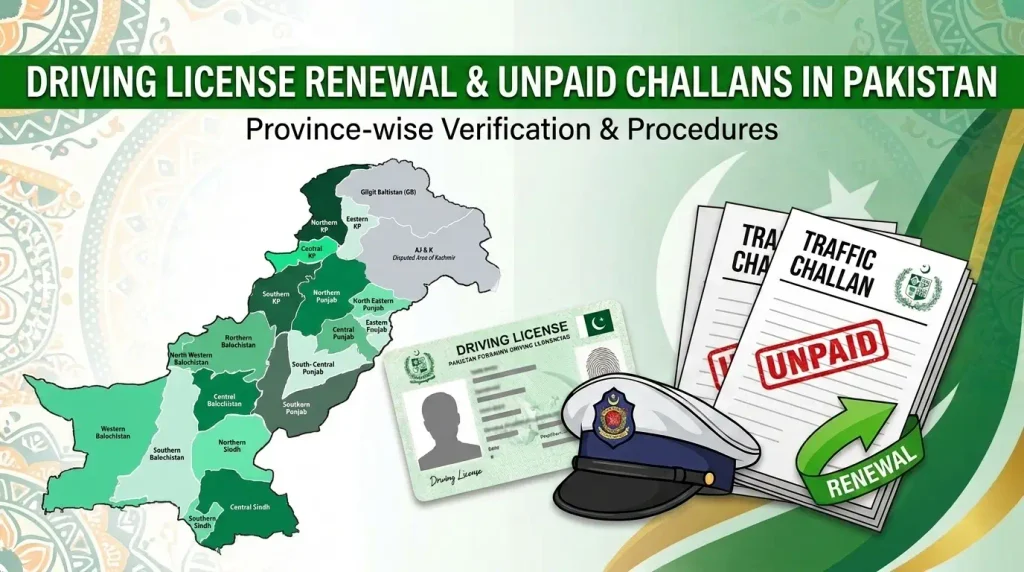
A single province-wide rule that automatically blocks every license renewal because of an unpaid challan is not consistently applied across all districts. The level of integration and verification can vary depending on the district and the licensing office involved.
Before visiting a licensing office, check whether you have any outstanding traffic fines. If you have already paid a challan, keep proof of payment with you in case the online record has not been updated yet.
Islamabad
In Islamabad, traffic enforcement and driving license services are handled by the relevant government authorities. Drivers should check their outstanding challans and confirm the current license renewal requirements before starting the application.
Whether an unpaid challan affects a license renewal application can depend on the current verification procedure and the requirements being followed by the relevant authority. It is therefore better not to assume that a pending challan will either automatically block the renewal or have no effect at all.
To reduce the chance of unnecessary delays, drivers should check for pending traffic fines before beginning the renewal process. If a genuine outstanding fine needs to be cleared, resolving it in advance can make the renewal process easier.
Sindh, Khyber Pakhtunkhwa, and Balochistan
The relationship between traffic challans and driving license renewal can also differ in Sindh, Khyber Pakhtunkhwa, and Balochistan. Drivers in these provinces should check the current requirements of the relevant traffic and licensing authority before submitting a renewal application.
An outstanding challan may or may not directly affect license renewal, depending on the province, service, and current verification process. Because these systems can change, drivers should avoid relying on assumptions about whether a pending fine will automatically block renewal.
To avoid possible complications, it is sensible to check and clear confirmed outstanding fines before beginning an important licensing process. Keeping your traffic record up to date can also make it easier to deal with future vehicle or licensing transactions.
Because traffic and licensing policies can change over time, the safest approach is to confirm the current position with the relevant local licensing or traffic authority before assuming that an unpaid challan will or will not affect your renewal.
How an Unpaid Challan Can Affect License Renewal
An unpaid challan does not necessarily prevent every driver from renewing a driving license. However, it can become relevant if the licensing or traffic authority checks outstanding records during the renewal process.
The exact effect depends on the service being requested, the province, and the rules currently applied by the relevant authority. In many provincial systems, an application is not automatically rejected simply because an unpaid challan exists. However, authorities may review traffic records during verification.
As government databases become more connected, traffic records may become increasingly relevant to different vehicle and licensing services. This means that checking your challan status before starting an important transaction can help you avoid surprises.
If you have an outstanding challan, check its current status before applying for a license renewal or an International Driving Permit. If the relevant authority requires the amount to be resolved first, follow the appropriate payment or correction procedure.
If you have an outstanding challan, check its status and resolve it according to the instructions of the relevant authority before starting your renewal application.
When Do Drivers Usually Discover Old Unpaid Challans?
Many drivers do not realize that an old traffic fine is still outstanding until they begin an important licensing or vehicle-related process. A challan may have remained unpaid for a long period, especially if the driver was not aware of it or did not have access to the relevant traffic record when it was issued.
Old unpaid challans can sometimes come to light when a person applies for a service that requires traffic or vehicle records to be checked.
Common situations include:
- Driving license renewal
- Vehicle ownership transfer
- Token tax payment or related vehicle services
- Vehicle fitness certificate renewal
- Applying for commercial vehicle permits
- Purchasing a used vehicle
- Fleet management audits for businesses
Checking your challan record before an important licensing or vehicle transaction can help you discover any outstanding issue in advance. This gives you time to verify the record, pay a genuine fine, or raise a correction request if something appears to be wrong.
Where Can Unpaid Challans Cause Problems?
Understanding how outstanding traffic fines may relate to different services can help drivers avoid unnecessary delays. Even when an unpaid challan does not directly block license renewal, it can still become relevant during other vehicle-related processes.
| Process | Possible Relevance of an Unpaid Challan |
|---|---|
| Driving license renewal | The authority may check relevant traffic records according to its current procedure. |
| Vehicle ownership transfer | Outstanding traffic dues may become relevant if the transfer system requires them to be resolved. |
| Token tax or vehicle services | Requirements can vary by province and service. |
| Commercial vehicle services | Additional checks may apply depending on the authority and vehicle category. |
| Vehicle resale | Buyers may want to check whether the vehicle has outstanding challans before completing a purchase. |
| Other official services | The effect depends on the records and requirements of the relevant authority. |
Regularly checking and clearing confirmed traffic fines can help create a smoother experience when dealing with licensing or other vehicle-related transactions.
Why You Should Clear Challans Before a License or Vehicle Process
- It helps you identify outstanding fines before starting an important transaction.
- It gives you time to resolve confirmed fines before they become an administrative issue.
- It provides payment records that can be useful if a paid challan is still incorrectly shown as unpaid.
- It makes it easier to deal with ownership or licensing questions if they arise.
- It helps you keep your traffic records organized and up to date.
Keeping proof of payment is particularly useful. If you have already paid a challan but the online record has not been updated, your receipt can help demonstrate that the payment was completed.
How to Check Pending Challans Before License Renewal
Checking your traffic record before applying for license renewal can help you identify outstanding fines before they become an unexpected issue.
- Visit the relevant provincial e-challan service for the vehicle currently or previously registered in your name.
- Enter the identification details requested by the applicable traffic system. Depending on the province, this may include a CNIC, vehicle registration number, challan number, or another reference.
- Review the results carefully and identify any pending challans.
- Pay confirmed outstanding challans using an available payment method.
- Keep your payment receipt or transaction reference after completing the payment.
- Allow the relevant system time to update the payment status if the change is not immediate.
- Proceed with your license renewal application once you have confirmed the current status.
Tip: Keep a digital or printed copy of your payment receipt after clearing a challan. If the online record has not updated yet, the receipt can help you explain the payment status to the relevant authority.
Search options differ between provincial traffic systems. Use only the identification details requested by the relevant official service and carefully review the information returned by the system.
Documents Commonly Required for Driving License Renewal
The exact documents required for driving license renewal can vary depending on the province, license category, age, and the licensing authority. Common requirements may include the following:
| Requirement | Notes |
|---|---|
| Original CNIC | Usually required as a valid, unexpired identification document. |
| Existing driving license | The original license or a renewal-eligible copy may be required. |
| Medical certificate | May be required for certain age groups or license categories. |
| Renewal fee | The amount can vary by license category and province. |
| Passport-size photographs | Usually required according to the relevant office’s current requirements. |
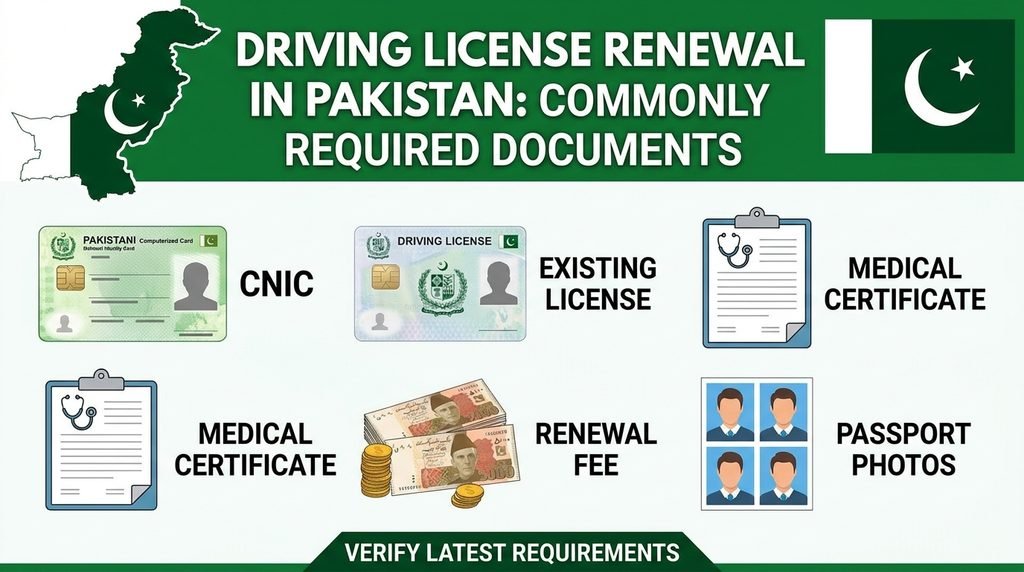
Drivers should confirm the latest document requirements before visiting the licensing office because requirements can change over time.
What to Do Before Renewing Your License
Before starting your license renewal, take a few minutes to confirm the current requirements of the relevant licensing authority. Checking your challan status in advance can save time if an outstanding fine needs to be resolved.
- Contact your local licensing or Excise and Taxation office when clarification is required.
- Verify your challan status through the relevant official traffic service.
- Keep copies of all payment receipts and transaction references.
- Make sure your vehicle ownership records are up to date where applicable.
- Carry your original CNIC and existing driving license.
- Confirm the current renewal fee and documentation requirements before visiting the office.
Important Reminder: License renewal requirements can change. If you have an outstanding challan, confirm the current position with the relevant licensing or traffic authority before submitting your renewal application.
How Long Does It Take for a Paid Challan to Update?
After paying a traffic challan, the payment status may not change immediately. Depending on the province, payment method, and system being used, an update may take anywhere from a few hours to several working days.
This is why it is important to keep your payment receipt or transaction reference after clearing an outstanding fine. If the challan still appears unpaid after several days, the receipt can help when contacting the relevant traffic authority.
A delay in updating the online record does not necessarily mean that the payment failed. Before making another payment, verify the transaction and contact the relevant authority if the status remains unchanged.
Frequently Asked Questions
Conclusion
An unpaid e-challan does not automatically prevent driving license renewal in every part of Pakistan. The effect can vary depending on the province, licensing authority, type of service, and current verification procedures.
Before applying for license renewal, check your current challan status through the relevant traffic system. If you find an outstanding fine that needs to be resolved, follow the payment or correction procedure provided by the responsible authority.
It is also a good idea to keep your payment receipt or complaint reference after resolving an outstanding challan. If the digital record takes time to update, these documents can help you demonstrate what action you have already taken.
Because traffic enforcement and licensing procedures can change, always confirm the latest requirements with the relevant official authority before visiting a licensing office or submitting a renewal application.
Checking your traffic record in advance, resolving confirmed outstanding fines, and keeping proper payment records can help make the license renewal process more straightforward and reduce the chances of an unexpected administrative issue.