PSCA E Challan Check Online 2026 – Easy & Complete Guide
Checking a traffic violation online has become an important part of responsible vehicle ownership in Punjab. The PSCA e challan check service allows vehicle owners and drivers to review electronic traffic violations associated with their vehicle through the Punjab Safe Cities Authority system. Instead of depending only on a paper notice or waiting for information to arrive, citizens can use the available digital verification system to check whether an e-challan record is presents.
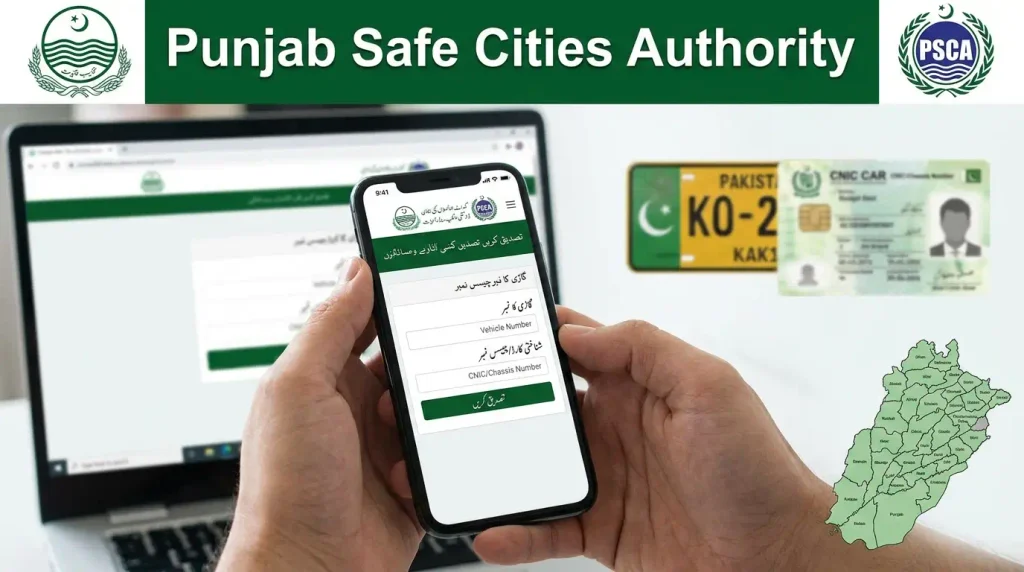
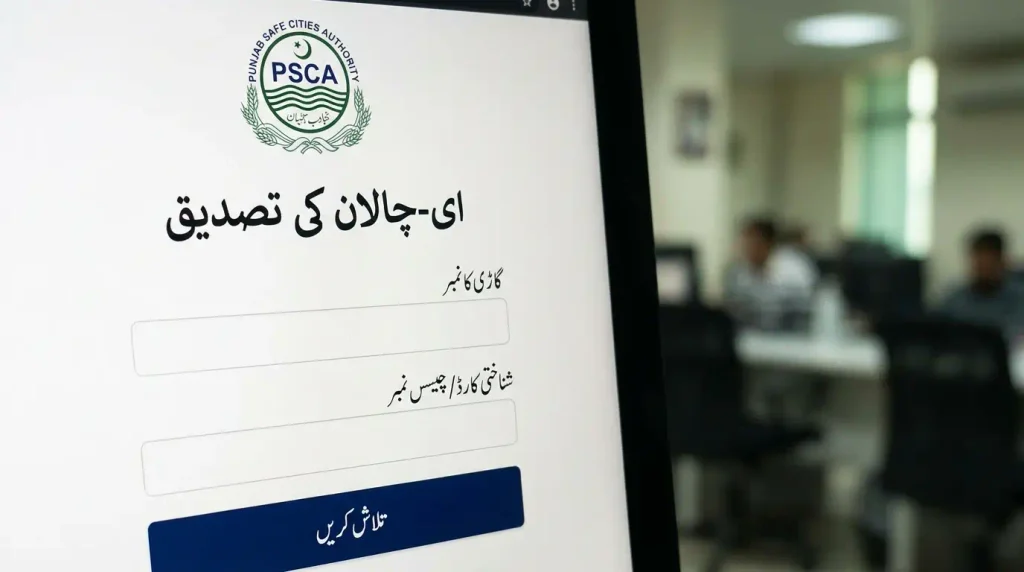
For anyone searching for PSCA e challan check, the basic process starts with the official PSCA e-challan verification interface. The current system asks for the vehicle plate number and either the CNIC or chassis number. Entering the requested information correctly is important because an incorrect registration number or identification detail can prevent the system from finding the relevant record.
PSCA E Challan Check Online
PSCA e challan check refers to the online process used to verify electronic traffic violation records handled through the Punjab Safe Cities Authority system. PSCA stands for Punjab Safe Cities Authority, which operates technology-based systems for public safety and traffic management. Its electronic challan system is part of a wider traffic management structure that uses technology to monitor certain traffic violations.
An e-challan is an electronic traffic violation record rather than a traditional handwritten ticket. The information is stored digitally and can be associated with a vehicle and its registration details. The online verification facility gives citizens a way to check whether a record is available in the system instead of relying entirely on physical documents.
The exact information displayed can depend on the record available in the system. Therefore, drivers should carefully review the details shown after completing the search. If the information appears unfamiliar, incomplete, or incorrect, the driver should use the appropriate official complaint or verification channel rather than assuming that every displayed detail is automatically correct.
Why drivers search for an e-challan
Drivers may search for an e-challan for several practical reasons. A person may have passed through an area where automated traffic monitoring is active and want to confirm whether a violation was recorded. A vehicle owner may also want to check the record before selling or transferring a vehicle, particularly when there is uncertainty about previous traffic violations.
Another common reason is that a driver may not have received a physical notice or may have changed contact details. An online check provides another way to review the available record. This makes digital verification useful even when a driver has not personally seen a paper challan.
How to Perform PSCA E Challan Check Online
The online verification process is designed to be straightforward. The first step is to use the PSCA e-challan verification system and identify the information requested by the search form. The current interface provides a field for the vehicle plate number and another field for either the CNIC or chassis number.
Enter the vehicle plate number carefully in the format requested by the system. Vehicle registration formats can differ, so the information should be entered according to the registration details of the vehicle. Avoid changing letters, numbers, or the sequence of the registration number because even a small mistake can affect the search.
After entering the plate number, provide the requested CNIC or chassis number. The system currently identifies this as a required verification detail. Use the information associated with the vehicle and enter the digits accurately. Once the required fields have been completed, submit the search and wait for the system to process the information.
If an e-challan record is available, review the information carefully. Look at the vehicle details, violation information, date or other available information, and any amount or status displayed by the system. If there is no record returned, check the entered information again before concluding that there are no violations.
Step 1: Enter the vehicle plate number
The plate number is the main vehicle identifier used during the online search. Before submitting the form, compare the number with the vehicle registration information. If the vehicle has a registration format that includes letters, numbers, or separators, follow the format accepted by the current PSCA interface.
Typing the registration number from memory can create mistakes, especially when a person owns more than one vehicle. It is better to check the registration document or vehicle details before entering the information. This simple step can reduce the possibility of searching against the wrong vehicle.
Step 2: Enter CNIC or chassis number
The second verification detail is important because the current PSCA e-challan search interface asks for either the CNIC or chassis number along with the plate number. If using a CNIC, enter the complete number requested by the system. If using a chassis number, make sure the characters are copied accurately from the vehicle documentation.
Do not add unnecessary spaces or change characters while entering the information. A chassis number can contain a combination of letters and numbers, so careful typing is especially important. If the search does not return the expected result, review both fields before trying again.
Step 3: Review the search result
Once the search has been submitted, review the result rather than immediately leaving the page. If the system shows an e-challan, read the available information carefully. The record may contain information that helps identify the violation and the vehicle involved.
If the result does not appear as expected, repeat the search after checking the plate number and verification information. A failed search does not automatically establish that a vehicle has no traffic record. The result can be affected by incorrect input, system availability, or other technical factors.
What Information Is Needed for PSCA E Challan Check?
The information needed for a PSCA e challan check is relatively simple. The current verification page identifies two main pieces of information: the vehicle plate number and either the CNIC or chassis number. These details help the system locate the relevant vehicle record.
The plate number should match the registered vehicle information. The CNIC should be entered as the complete identification number requested by the form, while a chassis number should be entered exactly as shown in the relevant vehicle documentation. Correct information is essential for an accurate search.
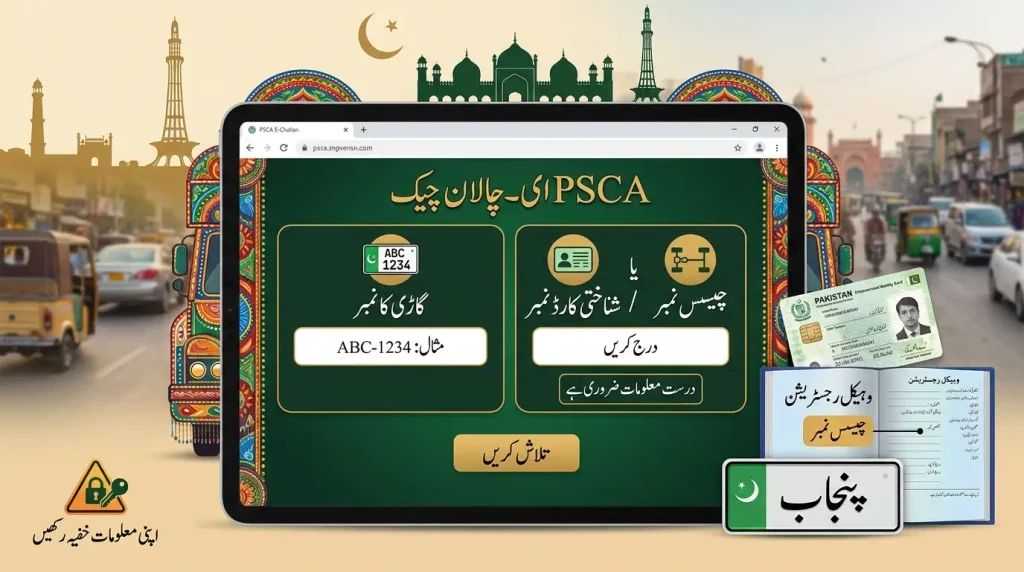
Drivers should also keep their vehicle documents available when performing an online search. Having the registration information nearby makes it easier to confirm the plate number and chassis details. This is particularly useful when the vehicle is owned by another family member or when several vehicles are registered within the same household.
Vehicle plate number
The plate number identifies the vehicle being searched. Because a vehicle registration number is easy to mistype, drivers should verify every letter and number before submitting the search. If the vehicle has recently changed registration details, the current information should be used according to the records available to the owner.
CNIC or chassis number
The second identifier provides an additional verification point. The current system accepts either a CNIC or chassis number with the plate number. Drivers should select the option they have available and enter it exactly as requested.
Keeping these details private is also important. A CNIC is sensitive personal information, so it should only be entered into the legitimate verification service or another trusted official channel. Drivers should avoid sharing identification numbers publicly on social media, open comment sections, or unknown websites.
What Traffic Violations Can Be Recorded Through the PSCA System?
The PSCA traffic management system uses technology for monitoring and enforcement of certain traffic violations. Its traffic management information identifies violations such as red light or traffic signal violations, wrong lane or wrong turn violations, one-way violations, and line, lane, or zebra crossing violations. These are examples documented by PSCA for its traffic management systems.
The purpose of automated monitoring is to identify certain violations through traffic surveillance and associated systems. The technology can support enforcement by recording information that can then be processed through the electronic challan system. The exact violation information shown for an individual vehicle depends on the record generated for that vehicle.
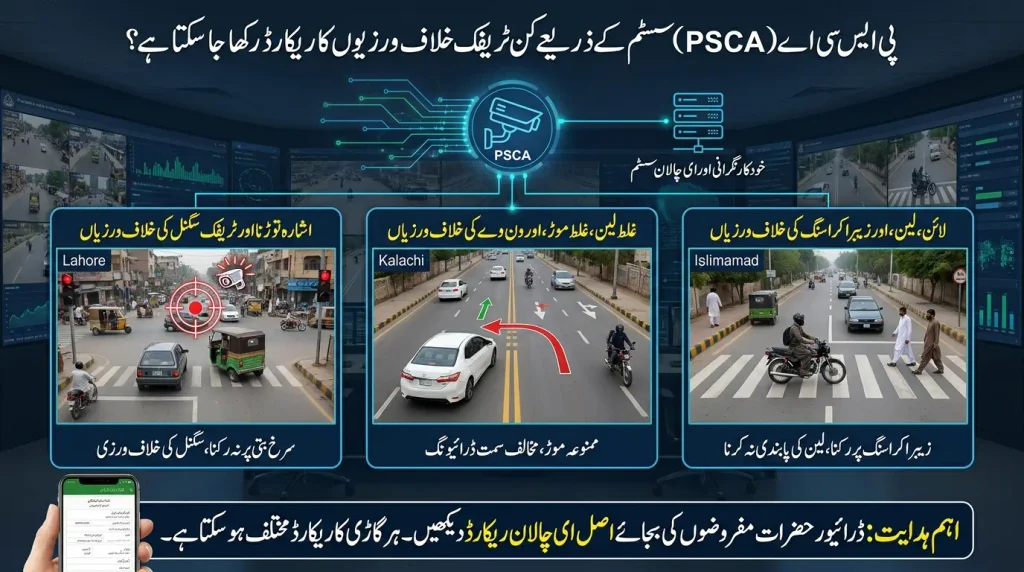
Drivers should therefore read the actual e-challan record instead of assuming the reason for a violation. Two vehicles may have different records, and the same driver may have different records on different dates. Reviewing the displayed details is more useful than relying on a general assumption about what caused a challan.
Red light and traffic signal violations
Traffic signal violations are among the types of violations identified by PSCA traffic monitoring information. Automated systems can monitor intersections and support electronic enforcement where the relevant technology is installed. If an e-challan is generated for this type of violation, the driver should review the record for the information provided.
Lane, turn and one-way violations
PSCA documentation also identifies wrong lane or wrong turn violations and one-way violations within the traffic monitoring system. These rules are important because road markings, lane directions, and permitted turns help organize traffic movement and reduce conflict between vehicles.
Lines, lanes and zebra crossings
The PSCA traffic management information also includes line, lane, and zebra crossing violations. Drivers should pay attention to road markings and pedestrian crossing areas because these markings communicate how vehicles should move and where pedestrians are expected to cross.
PSCA E Challan Check Through the Public Safety App
The PSCA Public Safety App provides another digital route for citizens who want to manage e-challan information. According to the Punjab Safe Cities Authority, the app allows users to check, download, and manage their e-challans. This makes the application useful for people who prefer handling traffic-related information through a mobile device.
The app is broader than e-challan verification alone. It is presented by PSCA as an all-in-one public safety application with several citizen services. For e-challan users, the important feature is the ability to access and manage available electronic challan information through the application.
Drivers should use the official application and keep it updated through the appropriate app distribution platform. Before entering personal or vehicle information, verify that the application is the genuine PSCA service. Avoid unofficial applications that use similar names or logos because personal information should not be provided to an unknown service.
Checking e-challans on a mobile device
Mobile access can be convenient for drivers who want to review their vehicle record without using a desktop computer. The important point is to use the official PSCA application and enter information carefully. A mobile search should be treated with the same level of attention as an online browser search.
What to Do After Finding an E-Challan
Finding an e-challan is not the end of the process. The next step depends on the information displayed in the record and the circumstances of the violation. Start by reading the available details carefully rather than immediately assuming that the record is incorrect or that the amount is due for every situation.
Check the vehicle information and violation details. If the record corresponds to your vehicle and the violation is understood, follow the current official procedure for dealing with the challan. If the record appears to contain an error, use the relevant official complaint or verification process instead of relying on social media posts or unofficial websites.
Drivers should keep any useful documentation connected with the vehicle and the event. Depending on the circumstances, this may include registration documents, photographs, transaction records, or other information that can help explain a dispute. The appropriate evidence depends on the nature of the issue.
Review the violation before taking action
A common mistake is to see an e-challan and focus only on the payable amount. The violation itself is equally important. Understanding what was recorded helps the vehicle owner determine whether the record relates to a particular journey, driver, or traffic situation.
This is especially important when several people use the same vehicle. The registered owner may not have been driving when the violation occurred. Reviewing the available date, location, and violation information can help the owner identify the circumstances surrounding the record.
Keep a record of important information
When dealing with a traffic record, it is useful to keep the relevant information available for future reference. A driver may need the challan details when asking a question, making a complaint, or confirming that a matter has been handled. Keeping accurate information can make communication with an authority easier.
Why Regular PSCA E Challan Checking Is Useful
Regular checking can help vehicle owners stay aware of their traffic records. A driver does not always know whether a camera-based system has recorded a violation during a particular journey. Checking the available record can therefore provide useful information about the vehicle’s status.
Regular checks can also be useful when a vehicle is shared. Family members, employees, or other authorized drivers may use the same vehicle. The owner may not personally know every journey taken in the vehicle, so reviewing the electronic record can help identify traffic violations associated with the registration.
Another benefit is awareness. Drivers who review their traffic records can identify repeated problems and become more attentive to traffic signals, lane markings, one-way restrictions, and other road rules. The wider purpose of electronic enforcement is connected with traffic management and road safety rather than simply producing a digital record
Useful for vehicles owners
Vehicle ownership includes responsibilities beyond keeping registration and other documents available. Understanding traffic records is also part of responsible ownership. A vehicle owner can use the online verification facility to stay informed about electronic violations connected with the vehicle.
Useful before vehicle transactions
People buying or selling a used vehicle may want to review the available traffic record before completing a transaction. An e-challan record can be relevant to discussions between a buyer and seller, although the parties should still follow the applicable official vehicle transfer and verification procedures separately.
Common Problems During PSCA E Challan Check
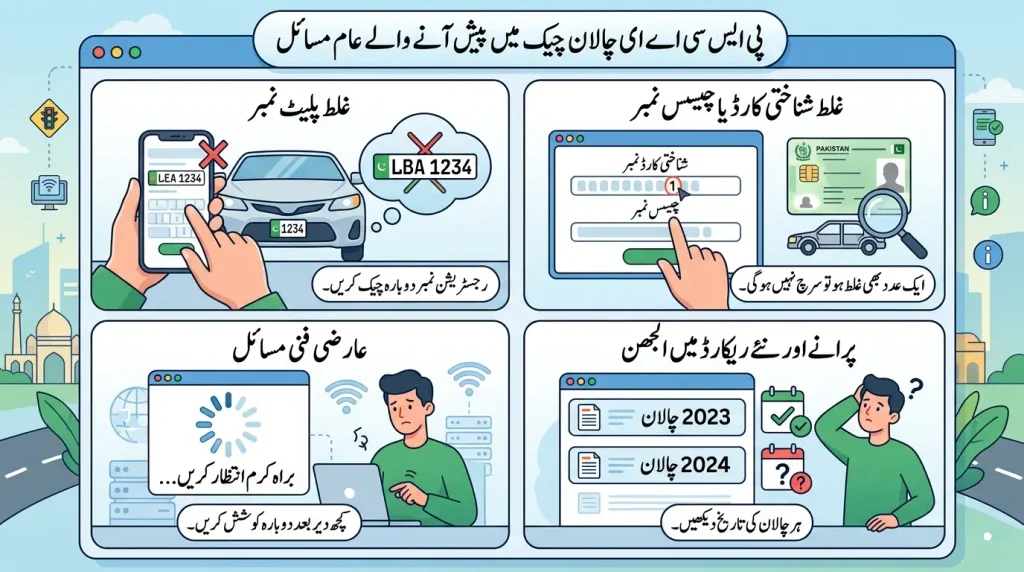
Although the online process is simple, users can experience problems while searching for an e-challan. Most basic problems are related to incorrect information, unfamiliar registration details, technical issues, or misunderstanding the result. Knowing these possibilities can help users avoid unnecessary confusion.
Incorrect plate number
The most basic issue is entering the wrong registration number. This can happen when a person has multiple vehicles or when a number is copied incorrectly. Always compare the entered number with the registration document before submitting the search.
Incorrect CNIC or chassis number
The same principle applies to the second verification field. A single incorrect digit in a CNIC or a mistaken character in a chassis number can affect the search. Review the information carefully before trying again.
Temporary technical problems
Online services can sometimes experience temporary technical problems. If the page does not load or the search does not complete, try again after a short period. A temporary technical issue should not be treated as proof that a vehicle has no e-challan record.
Confusing an old record with a new record
A vehicle may have more than one electronic traffic record. Drivers should read the dates and other available information instead of assuming that every record refers to the same event. Keeping track of individual challan information makes it easier to understand the vehicle’s history.
How PSCA E Challan Supports Traffic Management
The PSCA e-challan system is part of a broader traffic management approach. According to PSCA information, its Police Traffic Management System includes components such as red light monitoring, journey time management, police traffic signal control, variable message systems, and the e-challan system.
The role of electronic challans is therefore connected with traffic enforcement and management. Instead of depending only on an officer physically observing every violation, technology can help monitor selected locations and traffic situations. When a violation is detected through the relevant system, the information can be processed through the electronic enforcement structure.
For drivers, this means that traffic rules should be followed consistently rather than only when a traffic officer is visible. Signal compliance, correct lane use, permitted turns, and proper use of road markings are important parts of safe road behavior regardless of whether a camera is present.
Technology and traffic discipline
Technology can support traffic enforcement, but safe driving still depends on the driver’s behavior. A camera cannot replace attention, responsible decision-making, or knowledge of traffic rules. The most useful approach is to treat electronic enforcement as one part of a larger road-safety system.
PSCA E Challan Check for Different Types of Vehicle Owners
The need for an e-challan check is not limited to one type of driver. Private car owners, motorcycle users, family vehicle owners, business vehicle operators, and other drivers can all benefit from knowing how to verify an electronic traffic record when the vehicle falls within the relevant PSCA enforcement system.
Motorcycle users should pay attention to registration details when performing a search. Because motorcycles can be used frequently for commuting and delivery work, keeping vehicle records organized can make online verification easier. Car owners can follow the same basic approach by keeping their registration information and verification details available.
Businesses operating several vehicles may have a greater need for regular record management. When different employees use different vehicles, the person responsible for fleet records may need to keep track of registration details and traffic records separately. Accurate record keeping can reduce confusion when an e-challan appears.
Private vehicle owners
Private vehicle owners can use the verification system to remain aware of traffic records connected with their vehicles. This is particularly useful when a vehicle is used by more than one person or when the owner frequently travels through areas where automated traffic monitoring is active.
Business and fleet vehicles
Fleet owners may benefit from maintaining a simple internal record of vehicle registration numbers, assigned drivers, and traffic-related information. This can help the business identify which vehicle is associated with an e-challan and communicate with the appropriate driver when necessary.
Safety and Privacy Tips for PSCA E Challan Check
Online verification involves vehicle and personal information, so basic privacy precautions are important. Drivers should use the official PSCA verification service and avoid entering CNIC numbers or chassis information into websites that are not clearly associated with the relevant authority.
Be careful with messages that claim an urgent traffic fine must be paid through an unknown payment page. If a message contains a suspicious link, unusual request, or demand for unnecessary personal information, verify the matter through an official channel before taking action.
Do not share screenshots containing complete CNIC numbers, vehicle identification information, or other sensitive details publicly. If you need to ask someone about a technical problem, hide private information before sharing an image.
Use official information
Traffic services can change over time, including verification methods, app features, and payment procedures. For that reason, drivers should rely on current information from the relevant authority when making decisions about an e-challan.
PSCA E Challan Check and Responsible Driving
An online e-challan service is most useful when it is combined with responsible driving habits. Checking a record after a violation can help a driver understand what happened, but preventing repeated violations is even more important from a road-safety perspective.
Drivers should follow traffic signals, respect lane markings, use permitted turns, obey one-way restrictions, and pay attention to pedestrian crossing areas. These are basic behaviors that help maintain predictable movement on busy roads.
Electronic enforcement also means that drivers should not assume that a violation will only be recorded when a traffic officer is physically standing nearby. Technology-based traffic systems can operate through cameras and other monitoring equipment. The safest approach is therefore consistent compliance with traffic rules.
Learning from traffic records
An e-challan can also serve as a reminder to review driving habits. If a driver repeatedly receives records related to the same type of violation, that pattern may indicate an area where greater attention is needed. For example, frequent lane-related violations may encourage a driver to pay closer attention to road markings and lane discipline.
Frequently Asked Questions
Final Thoughts
The PSCA e challan check service provides a convenient way for vehicle owners and drivers to review electronic traffic violation information. The current PSCA verification process uses the vehicle plate number together with either the CNIC or chassis number, making it important for users to keep their vehicle information available and enter it accurately.
PSCA’s electronic challan system is part of a broader traffic management framework that uses technology to support traffic enforcement. The system is associated with monitoring selected traffic violations, including traffic signal violations, wrong lane or wrong turn violations, one-way violations, and line, lane, or zebra crossing violations.
For everyday drivers, the most important point is to treat online verification as a practical record-checking tool. If a challan appears, read the available information carefully and follow the appropriate official procedure. If no record appears, make sure the entered information was correct before drawing conclusions.
Drivers should also protect their personal information. CNIC and vehicle details should only be entered into legitimate services, and suspicious messages or unofficial websites should be treated carefully. The PSCA Public Safety App provides another official digital option for checking, downloading, and managing e-challans.
Ultimately, the value of an e-challan system goes beyond checking a fine. It supports a wider approach to traffic management in which electronic monitoring, enforcement, road rules, and responsible driving work together. Regularly checking vehicle records can help owners stay informed, while following traffic rules consistently can reduce the chance of violations in the first place.