
Fake E Challan SMS Pakistan: How to Identify & Avoid Scams 2026
A fake e challan SMS Pakistan message can look almost identical to a genuine traffic-fine notification. It may contain a vehicle registration number, challan number, fine amount, payment request, or a link that appears to belong to an official traffic authority.
This is why simply looking at the message is not enough to determine whether it is real. Before clicking a link, entering information, or making an e challan payment, verify the traffic challan independently through the relevant official traffic authority website.
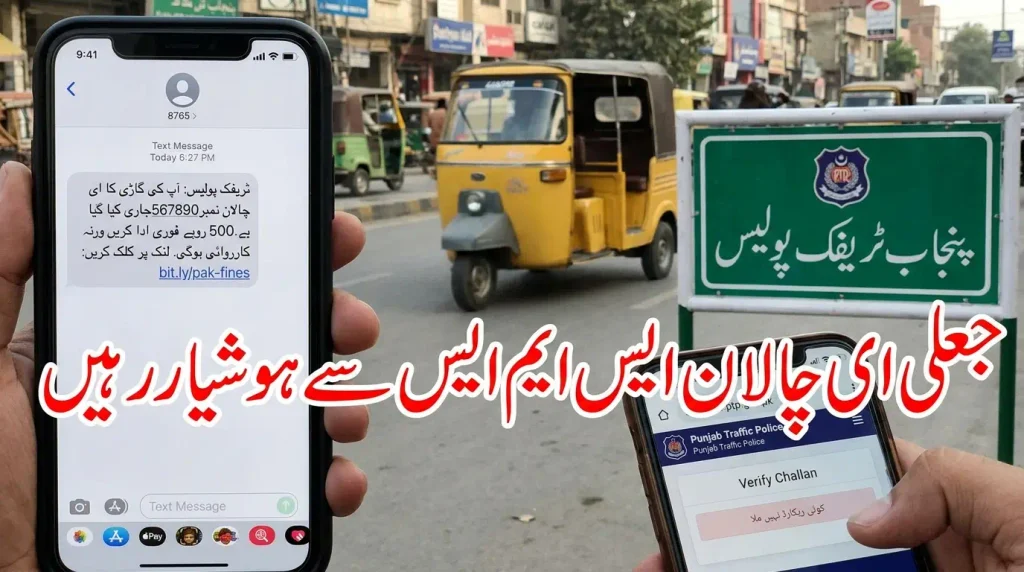
A suspicious e challan SMS may be designed to create urgency and encourage vehicle owners to make a payment before checking whether the challan actually exists. Knowing the common signs of a fake traffic fine SMS can help you identify suspicious messages and protect your personal and banking information.
Why Fake E-Challan SMS Scams Are Common
As more traffic-fine services move online, scammers can use the appearance of official e challan Pakistan services to make fraudulent requests look genuine.
A fake e challan SMS can be designed to create panic and urgency. The message may encourage a vehicle owner to click a suspicious link, provide personal information, or make a payment to a fraudulent account.
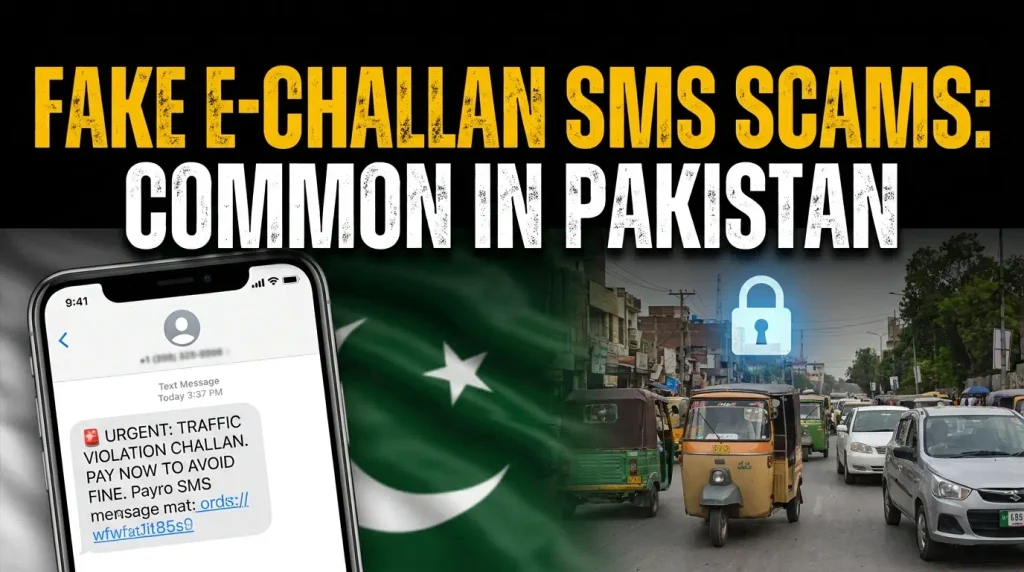
These e challan SMS scams can appear convincing because they may use traffic-related information and language that looks similar to an official notification.
For this reason, an unexpected traffic-fine message should be independently checked through the relevant official traffic portal before any payment or other action is taken.
How Real E Challan SMS Notifications Typically Look
A genuine traffic-fine notification may contain information such as a vehicle registration number or a challan reference. However, the appearance of an SMS does not prove that it is genuine.
A real-looking e challan SMS may include:
- Sender information that appears to match a known traffic authority notification channel.
- Your actual vehicle registration number.
- A challan number that can be independently verified through the official portal.
- A website address related to the traffic service that should be independently verified before use.
- Official payment instructions rather than a request to send money to an individual’s personal bank account or mobile wallet.
- No extreme urgency such as a demand to pay within one hour or face arrest.
Sender information alone should not be treated as proof that an SMS is genuine.
A manually issued traffic ticket may also not appear online immediately. If a recent challan cannot be found, check again later using the relevant e challan status check service or contact the relevant traffic authority.
Warning Signs of a Fake E-Challan SMS
Recognizing the warning signs of a fake e challan message can help vehicle owners avoid financial loss and protect sensitive information.
1. Suspicious or Shortened Links
One of the main warning signs of a fake e challan SMS Pakistan message is a suspicious or shortened URL.
Some fake traffic-fine messages may contain shortened links such as bit.ly URLs. Others may lead to websites designed to imitate official government domains.
Do not trust a website simply because it looks official. Instead, open the relevant traffic authority’s official website separately and use the service available there to verify e challan details.
Avoid using the payment or verification link included in an unexpected SMS until the challan has been independently confirmed.
2. Urgent or Threatening Language
A fake traffic fine SMS may use urgent or threatening language to make the recipient act quickly.
Examples can include claims that a driving licence will be cancelled, legal action will be taken within 24 hours, or immediate payment is required.
Urgent or threatening language is particularly concerning when the message also demands payment through an unfamiliar link.
Instead of responding to the message immediately, verify the traffic challan through the relevant official traffic authority.
3. Requests for Direct Mobile Wallet Payments
Another warning sign of an e challan payment scam is a request to transfer money directly to a personal JazzCash or EasyPaisa account.
If a suspicious e challan SMS asks you to pay through a personal account or unfamiliar payment method, do not use the payment information contained in the message.
First, verify the e challan Pakistan record through the relevant official traffic service and check the payment instructions provided there.
4. Incorrect Vehicle Information
A fake challan message may contain an incorrect vehicle registration number, generic vehicle information, or details that do not match official records.
Always compare the vehicle information in the SMS with the information available through the relevant government traffic portal.
If the vehicle details do not match, do not make a payment based on the SMS.
5. Requests for Sensitive Information
A suspicious e challan SMS scam may attempt to collect sensitive financial information through an unofficial website.
Never provide your:
- ATM PIN
- Card CVV
- OTP
- Banking password
- Other sensitive financial information
If a traffic-fine SMS or the website opened through it asks for this information, stop and verify the request through the relevant traffic authority.
Avoid opening links in unexpected traffic-fine messages. Never enter your card PIN, CVV, OTP, or banking password on a website reached through an unsolicited SMS.
Official Helplines to Verify Challans
Different areas of Pakistan use different traffic authorities and systems for e challan verification.
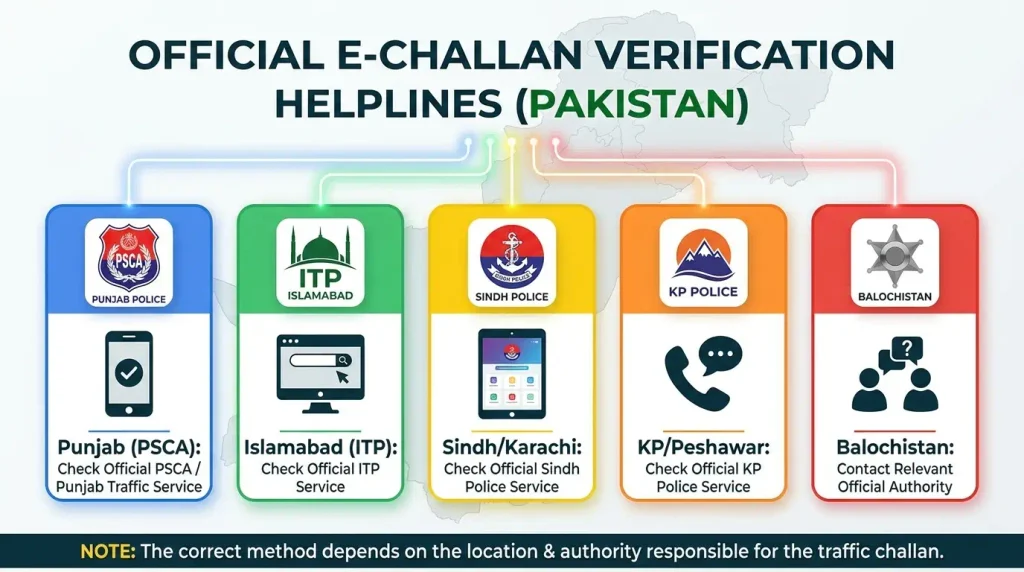
| Area | Verification Method |
|---|---|
| Punjab (PSCA) | Check the official PSCA / Punjab Police traffic service. |
| Islamabad (ITP) | Check the official Islamabad Traffic Police service. |
| Sindh/Karachi | Check the official Sindh Police traffic service. |
| KP/Peshawar | Check the official KP Police traffic service. |
| Balochistan | Contact the relevant official traffic police authority. |
The correct e challan check method depends on the location and authority responsible for the traffic challan.
Use the official traffic service relevant to the authority that issued the challan rather than relying on a link received through an SMS.
How to Verify a Fake E Challan SMS Pakistan Message
If you receive a fake e challan SMS Pakistan message or are unsure whether a traffic-fine SMS is genuine, verify the information independently.
Step 1: Do Not Click the Link
Do not click any link included in an unexpected traffic fine SMS.
A suspicious link may lead to a fraudulent website that imitates an official government or traffic portal.
Step 2: Open the Official Traffic Portal Separately
Open your browser separately and manually type the official portal address.
For Punjab, the source identifies the PSCA portal as:
echallan.psca.gop.pk
For other areas, use the verified official portal belonging to the relevant traffic authority.
Step 3: Search for the E Challan
Use the information requested by the official portal.
Depending on the service, this may include:
- Vehicle registration number
- CNIC
- Challan number
- Another reference
This allows you to perform an independent e challan status check rather than relying on the information provided by the SMS.
Step 4: Compare the Challan Details
Compare the details shown on the official portal with the information contained in the fake challan message or suspicious SMS.
Check the:
- Challan number
- Fine amount
- Vehicle details
- Violation
- Date
- Location
If the information does not match, do not make a payment through the SMS.
Step 5: Contact the Relevant Traffic Authority
If no record is found or the information is unclear, contact the relevant traffic authority to confirm whether the traffic notice is genuine.
If you remain unsure, contact the relevant traffic police helpline directly.
Which Authorities Manage E-Challan Systems in Pakistan?
E challan Pakistan services are organized through different authorities and systems. The relevant authority depends on the location or traffic service involved.
| Area | Relevant Authority |
|---|---|
| Punjab | Punjab Safe Cities Authority and relevant Punjab traffic authorities |
| Islamabad | Islamabad Traffic Police |
| Sindh | Relevant Sindh traffic authorities |
| Khyber Pakhtunkhwa | Relevant KP traffic authorities |
| Balochistan | Relevant Balochistan traffic authorities |
| National Highways | National Highways & Motorway Police |
A search on one official e challan portal may not cover records maintained by another authority.
Always use the traffic portal relevant to the location or authority that issued the challan.
What to Do If You Already Clicked a Suspicious Link
If you already clicked a suspicious e challan SMS link, do not enter any banking details, OTPs, or personal information on the page.
Close the browser tab immediately.
If you entered card details, contact your bank immediately to freeze or monitor the card.
If anything was downloaded from the suspicious website, remove the downloaded file and run a security scan using your device’s trusted security tools.
If you lost money or shared sensitive information through a suspected e challan scam, report the incident through the appropriate official cybercrime reporting channel. Also contact your bank immediately if financial information was involved.
You can also report the sender or message to your mobile network operator and contact the relevant traffic police authority.
How to Stay Safe from Fake E Challan SMS Pakistan Scams
Following a few simple precautions can help protect you from common fake e challan SMS scams.
- Never click links from unknown SMS messages.
- Always type official website addresses manually.
- Verify challan details on the official government portal.
- Never share OTP codes with anyone.
- Never provide ATM PINs, card CVV numbers, or banking passwords.
- Keep your mobile phone and browser updated.
- Enable transaction alerts from your bank.
- Report suspicious messages immediately.
These steps can help you avoid fraudulent traffic-fine messages and suspicious e challan payment requests.
Why Verification Is Important Before Making Any Payment
A fake traffic challan can look convincing even when the message contains a vehicle number or fine amount.
Before making any payment, verify the challan independently through the official traffic system.
Compare the vehicle registration number, violation, date, location, and amount with the information displayed in the official system.
If the details do not match, stop the payment and contact the relevant traffic authority.
Official Verification Resources
The source identifies these official resources for verification and reporting:
- PSCA E-Challan Portal (Punjab)
- Islamabad Traffic Police (ITP)
- National Cyber Crimes Investigation Agency (NCCIA)
If a challan cannot be verified through an official portal, do not make a payment through the e challan SMS link.
Contact the relevant traffic authority for confirmation.
Why Scammers Target Vehicle Owners in Pakistan
Fake e challan messages are designed to appear trustworthy so that vehicle owners act before checking the information independently.
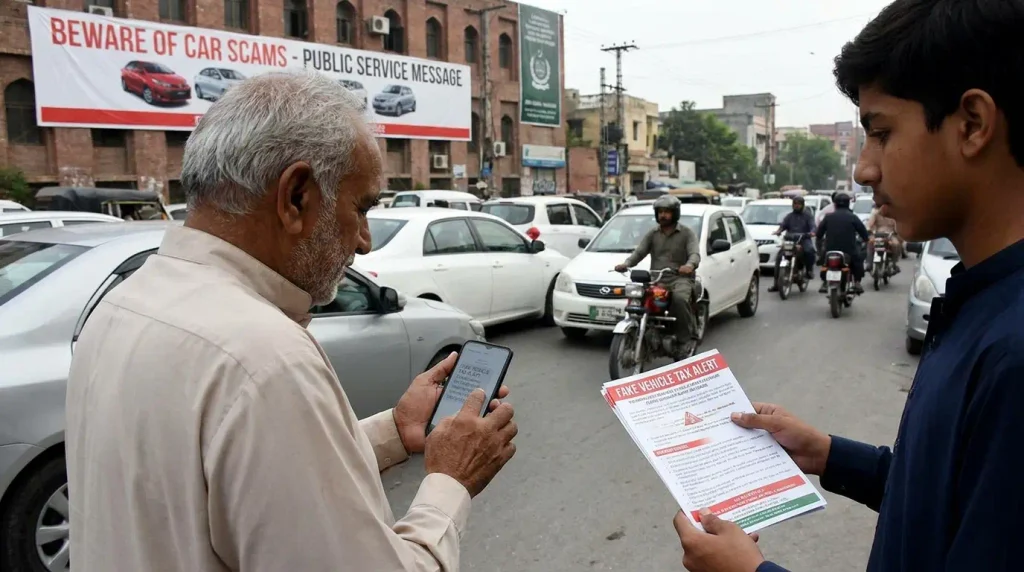
A fraudulent message may create fear by mentioning:
- Fines
- Driving licence suspension
- Vehicle seizure
- Legal action
Scam messages can be sent to many people and may be designed to resemble genuine government notifications.
Some fraudulent messages direct users to websites that imitate government portals and attempt to collect personal or banking information.
To stay safe from an e challan scam Pakistan message, verify the traffic challan through the relevant official traffic portal instead of using a payment link received by SMS.
Taking a moment to verify an unexpected notification can help prevent financial loss and protect personal data.
Common Examples of Fake E-Challan SMS Messages
Fraudsters may use similar wording to create panic and pressure vehicle owners into making immediate payments.
Common examples of scam-style messages include:
- “Your vehicle has received a traffic fine. Pay within 24 hours to avoid legal action.”
- “Final warning! Your driving license will be suspended if payment is not received today.”
- “Outstanding challan detected. Click the link below to avoid vehicle seizure.”
- “Traffic violation recorded. Immediate payment required through JazzCash.”
These examples represent scam-style wording. Message formats can change, so wording alone should not be used to determine whether a traffic-fine notice is genuine.
Always verify e challan information through the relevant official traffic authority.
How to Report a Fake E-Challan SMS
If you receive a suspicious fake e challan SMS, keep the relevant information before deleting it.
- Take a screenshot of the SMS.
- Save the sender number.
- Do not click any links.
- Report the incident through the relevant official cybercrime reporting channel.
- Inform your mobile network provider.
- Contact the relevant traffic police authority.
- Delete the message after saving the information needed for reporting.
If you lose money or share sensitive information through a suspected scam, consider reporting the incident through the appropriate official cybercrime reporting channel and contact your bank immediately if financial information was involved.
Frequently Asked Questions
Conclusion
A fake e challan SMS Pakistan message can look genuine when it includes a vehicle number, fine amount, challan reference, or urgent payment request. However, these details alone do not prove that the message is legitimate.
If you receive an unexpected traffic fine SMS, do not use its payment link. Check the challan independently through the relevant traffic authority and use only the payment method provided through the official service.
Never share your OTP, PIN, CVV, or banking password in response to an unexpected traffic-fine message. If the notice appears suspicious, contact the relevant authority using contact information obtained independently from its official website.
The safest approach is to verify e challan information before making a payment or sharing sensitive information.
This is an independent informational website and is not affiliated with any government agency, traffic authority, or official portal.