
Safe City Challan Pakistan 2026 – Easy Complete Guide
Safe city challan is a commonly searched term in Pakistan for traffic fines connected with digital traffic monitoring and electronic enforcement systems. As traffic management becomes more technology-based, drivers may encounter traffic cameras, number plate monitoring, digital records, and online challan verification instead of depending only on a traditional paper ticket.
For a vehicle owner, the important question is not only whether a traffic violation has been recorded, but also how to verify that record safely. A driver may need to check the vehicle registration number, violation details, challan status, payment information, or the authority responsible for the record before taking further action.
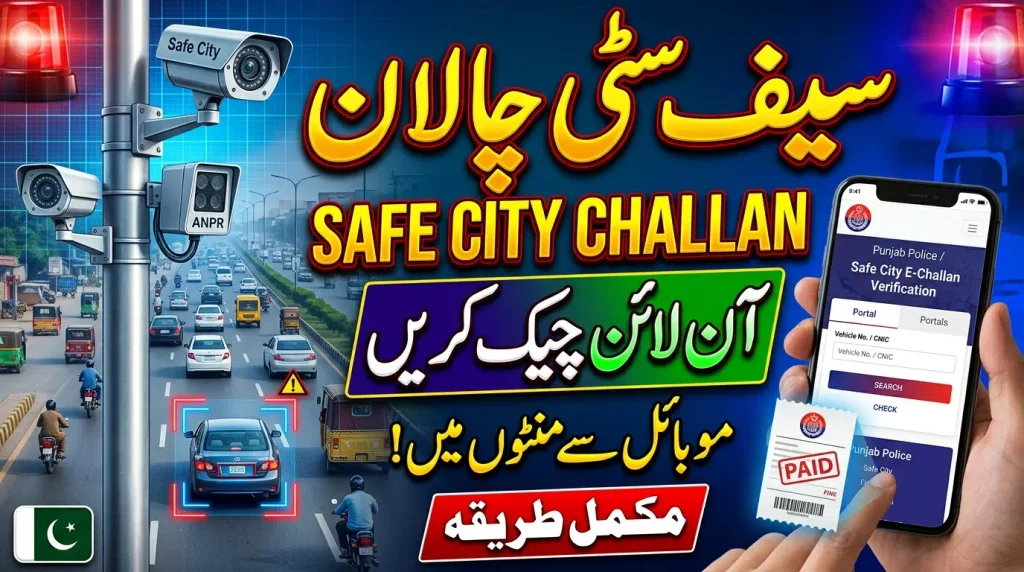
Safe city systems are not necessarily identical across every city in Pakistan. The information required for checking a challan, the available payment options, and the method used to dispute a record can depend on the authority operating the local traffic enforcement system. Therefore, drivers should always identify the correct authority instead of assuming that one website covers every city.
This complete guide explains what a safe city challan is, how digital traffic enforcement works, how to check a challan, what information may be required, how to understand the displayed record, what to do when no result appears, how to deal with an incorrect challan, how to avoid fake messages, and what vehicle owners should check before making a payment.
What Is a Safe City Challan?
A safe city challan generally refers to a traffic challan connected with a digitally monitored traffic enforcement environment. Instead of relying only on a traffic officer stopping a driver on the road, technology can also support the identification and recording of traffic violations.
Modern traffic monitoring may involve road cameras, traffic signals, monitoring centers, electronic records, number plate recognition, and other tools used by the responsible authority. When a violation is detected and processed, the resulting record may become part of an electronic challan system.
This does not mean that every camera automatically creates a fine or that every city follows exactly the same process. The responsible authority still determines how violations are reviewed, recorded, issued, displayed, and handled.
Digital Traffic Enforcement Explained
Digital traffic enforcement uses technology to support traditional traffic policing. Cameras and monitoring systems can help authorities observe traffic flow, identify possible violations, maintain evidence, and connect an incident with the relevant vehicle record.
For drivers, the biggest practical difference is that a violation may sometimes be recorded without a traditional roadside stop. This is why checking available electronic challan records can be useful even when a driver has not received a physical ticket directly from an officer.
However, online verification should always be done through the relevant official system. Traffic enforcement involves vehicle and sometimes identity information, so entering sensitive information on an unknown website can create unnecessary privacy risks.
How Does a Safe City Challan Work?
The process normally starts when a possible traffic violation is observed through an authorized enforcement method. Depending on the location and system, this could involve a camera, monitoring technology, an enforcement officer, or a combination of digital and manual processes.
The relevant information is then processed according to the procedure followed by the responsible authority. A vehicle registration number or another identifier may be connected with the traffic event. Once the record becomes part of the electronic system, it may be available for checking through an official website, application, facilitation service, or another approved channel.
A driver should not assume that an image captured by a road camera automatically proves a finalized challan. The official record is what matters. Therefore, if you receive a notification or believe a violation was recorded, verify the challan through the appropriate authority before making a payment.
Role of Traffic Cameras and Number Plates
Traffic cameras can help authorities monitor busy intersections, major roads, traffic signals, and areas where violations frequently occur. Depending on the technology being used, the monitoring system may also assist in identifying a vehicle registration plate.
The registration number is important because an electronic challan must be connected with the correct vehicle record. This is also why drivers should keep their registration details accurate and ensure that ownership transfers are completed through the relevant vehicle registration authority.
If a vehicle is still registered in a previous owner’s name, future traffic records can create confusion for both the old and new owner. Updating ownership information is therefore important beyond simply checking challans.
How to Check Safe City Challan Online
The safest method for checking a safe city challan is to begin with the authority responsible for traffic enforcement in the area where the violation may have occurred. Do not assume that every challan can be found through one nationwide search page.
Once the correct authority has been identified, use its official website, application, or recognized verification channel. The service may ask for a vehicle registration number, CNIC, chassis number, challan number, or another identifier depending on the system.
Enter every detail carefully and submit the search. If a record appears, compare the displayed vehicle and violation information with your actual vehicle before making any payment.
Identify the Correct Authority First
This is one of the most important parts of the process. A challan recorded by one city’s enforcement system may not appear on a portal operated by another authority. Searching the wrong database can therefore return no result even when a valid traffic record exists elsewhere.
If you already have a printed notice, SMS notification, or challan reference, examine it carefully for the name of the issuing authority. If you only suspect that a camera recorded a violation, start with the official traffic or safe city service responsible for the location where the event occurred.
A correct authority means a more accurate search and also reduces the chance that you will share vehicle or identity information with an unrelated website.
Enter the Vehicle Details Carefully
Typing errors are a common reason for failed challan searches. Check the registration number from the vehicle documents rather than entering it from memory. Letters, digits, spaces, plate series, and hyphens can all matter depending on the format accepted by the system.
If the system asks for a CNIC or chassis number, enter the information only after confirming that the service is official. Chassis numbers can contain similar-looking letters and numbers, so compare each character carefully.
If the vehicle has recently changed ownership, remember that the registration record may still contain the previous owner’s information until the transfer process is properly completed.
Information You May Need for Challan Verification
Different traffic enforcement systems can request different information. Understanding the most common identifiers makes it easier to prepare for a search and reduces confusion when the portal asks for more than the vehicle number.
Vehicle Registration Number
The registration number is one of the most common details associated with a traffic challan. It helps the system identify which vehicle is connected with the traffic record.
Always enter the registration number exactly as required by the official service. If no record appears, compare the number with the registration documents before assuming that no challan exists.
CNIC or Chassis Number
Some verification systems may ask for additional information to reduce incorrect matches. A CNIC may be used to connect the vehicle with owner information, while the chassis number provides another way to identify the vehicle itself.
These details should be treated as sensitive information. Do not enter them on a random website simply because it uses words such as safe city, traffic challan, vehicle checker, or e-challan in its name.
Challan Number or Reference
If you already received a challan notice, the reference or challan number can be useful for identifying the specific traffic record. Some systems may use this number as the main search identifier instead of relying only on the vehicle registration number.
Keep the original challan reference available until the matter has been resolved, particularly if you need to make a payment or raise a complaint later.
What Details Can Appear in a Safe City Challan?
Once a valid record is found, the system may display information that helps the driver understand the challan. The exact fields can vary, but the purpose is generally to connect the traffic violation with the relevant vehicle and indicate what action is required.
Information may include the vehicle registration number, challan reference, violation category, date, location, payable amount, and current payment status. Some systems may provide more information, while others may show only the details required for verification and payment.
Check all available information before taking action. If even one important detail appears inconsistent, verify the matter with the issuing authority before paying.
Check the Violation Date and Location
The date and location can help you determine whether the traffic event is familiar. This is especially useful when the challan was generated from camera-based monitoring and you were not stopped by an officer at the time.
If the location is somewhere the vehicle could not reasonably have been at the recorded time, the information should be reviewed before payment. Keep the challan reference and any relevant vehicle information when contacting the authority.
Check the Fine and Payment Status
The payable amount and current status are also important. If the record is still outstanding, verify the fine before paying. If you already paid the challan but it still appears unpaid, do not immediately make a second payment.
Instead, confirm that the first transaction was successful and keep the official receipt, transaction reference, or other payment proof. If the status does not update after a reasonable period, use an official support channel to request clarification.
Common Traffic Violations Connected With Digital Challans
The exact violations monitored through a safe city system depend on local traffic laws, technology, and enforcement policy. Drivers should therefore rely on the violation shown in the official challan rather than assuming that every camera monitors the same offences.
Digital enforcement can potentially support the recording of traffic signal violations, speeding where the relevant monitoring system is available, lane-related offences, prohibited turns, parking violations, helmet or seat-belt issues, and other traffic-rule breaches that fall within the authority’s enforcement system.
The best way to reduce the risk of receiving a traffic challan is simple: follow road signs, respect signals, remain within the applicable speed limit, use seat belts and helmets where required, observe lane markings, and avoid unsafe driving behavior.
Why Safe City Challan May Show No Record
A no-record result is one of the most common problems encountered during online challan checking. However, an empty result should not automatically be interpreted as proof that the vehicle has no traffic record.
The reason may be as simple as an incorrect registration number. It could also involve a CNIC or chassis mismatch, the wrong traffic authority, an incorrect challan reference, or a recent violation that has not yet become visible in the public system.
Wrong Traffic Portal or Authority
This is especially important in Pakistan because traffic systems can be operated by different provincial, city, police, or safe city authorities. A search on the wrong portal may return nothing even when a record exists in another system.
Return to the location of the traffic event and identify the responsible authority. If you received an official notice, use the information printed or displayed on it to determine which system should be checked.
Recent Challan May Need Processing Time
A recently recorded traffic event may not always appear immediately in an online search. Information can require processing before it becomes part of the public verification system.
If the incident happened recently, check the official service again later. If you already received an official notice and need urgent confirmation, contact the responsible authority instead of repeatedly entering personal information on third-party websites.
How to Pay a Safe City Challan
Before paying a safe city challan, confirm that the record belongs to the correct vehicle. Check the registration number, challan reference, violation information, fine amount, and current status.
After verification, follow the payment method currently provided or recognized by the issuing authority. Depending on the system, payment may be supported through a government payment service, banking channel, official application, payment reference, or another authorized method.
Payment methods can change over time. Therefore, an old article or screenshot should not be treated as the final authority for a current challan. Follow the instructions displayed by the official service at the time of payment.
Save the Payment Receipt
Always keep proof of payment. This may include an official receipt, bank transaction reference, payment identifier, confirmation message, or another record provided through the authorized payment process.
Do not delete the proof immediately after paying. Keep it until the traffic record reflects the expected status. If a technical delay occurs, the payment information can help the authority investigate the issue.
Paid Challan Still Showing as Unpaid
If you have already made a successful payment but the online challan still appears unpaid, avoid paying it again immediately. First review the original transaction and make sure that the payment actually completed successfully.
Next, compare the payment reference with the correct challan. If the transaction details are correct, allow reasonable time for the online system to update. Digital records do not always refresh instantly.
If the status continues to remain incorrect, contact the responsible authority through its official support or facilitation process. Provide the challan number and payment evidence where requested. Keeping proper payment records is particularly important in this situation.
What to Do If the Safe City Challan Is Incorrect
An incorrect or unfamiliar challan should be reviewed before payment. Check the vehicle number, date, location, violation, fine, and any available evidence connected with the record.
If the information does not appear to relate to your vehicle, use the official complaint or review process provided by the issuing authority. Different authorities may have different procedures, so follow the current instructions given by the system responsible for the challan.
Keep useful documentation, including the challan reference, screenshots of the official record where appropriate, vehicle documents, ownership information, and any previous payment evidence. Clear documentation can make it easier to explain the problem.
Do Not Use Unofficial Agents
Avoid anyone who claims that they can privately delete, remove, or cancel a valid traffic challan in exchange for money. A genuine correction should be handled through the authority responsible for the traffic record.
Using an unofficial agent can expose your vehicle documents, CNIC information, payment details, or personal data without providing any reliable solution.
How to Avoid Fake Safe City Challan Messages
Traffic challan scams can use SMS, messaging applications, emails, social media messages, or fake websites. A fraudulent message may claim that an urgent traffic fine must be paid immediately and provide a suspicious payment link.
Do not treat an unexpected message as proof that a challan is genuine. Instead, independently open the relevant official traffic or safe city service and check whether the traffic record actually exists.
If the record is genuine, follow the payment method shown by the official authority. If no official record can be confirmed, do not send money simply because the message creates urgency.
Protect Your CNIC and Vehicle Data
Vehicle and identity information should be handled carefully. A website does not become trustworthy simply because it contains the words safe city or challan in its domain name, title, or design.
Do not upload CNIC images, vehicle documents, registration records, or payment details to an unknown service. If documentation is required for an official complaint, use the recognized complaint or facilitation channel provided by the responsible authority.
Safe City Challan Check Before Buying a Used Vehicle
Checking available traffic challan records can be a useful step before buying a used car or motorcycle. A prospective buyer does not want to discover unresolved traffic records only after completing the transaction.
Where owner information is required for verification, ask the seller to participate in the check. Do not guess another person’s CNIC or use personal information without a legitimate reason.
A challan check should not replace normal used-vehicle verification. Ownership, registration, vehicle tax, transfer documents, chassis information, and other relevant records should also be reviewed through the appropriate channels.
Check Records Before Ownership Transfer
If available records show an outstanding traffic challan, discuss it with the seller before completing the purchase. Resolving the matter before ownership transfer can reduce confusion about whether an older violation belongs to the seller or the new owner.
Also remember that a blank result from one system does not necessarily prove that the vehicle has no traffic record anywhere else. The vehicle may have been driven in different jurisdictions that maintain separate enforcement databases.
Common Mistakes While Checking Safe City Challan
One common mistake is using the wrong website. A driver may search for a generic challan checker and enter vehicle information without first confirming which authority maintains the actual traffic record.
Another common problem is typing incorrect registration information. One wrong letter or digit can cause a failed search. Drivers may then incorrectly assume that there is no challan.
Paying before reviewing the record is another avoidable mistake. A challan should be compared with the correct vehicle, violation details, date, location, and payable amount before payment is made.
Finally, many users forget to save payment evidence. Keeping the transaction reference or official receipt is one of the easiest ways to protect yourself if the system does not update immediately.
Why Safe City Traffic Monitoring Matters
Digital traffic management is not only about issuing fines. Monitoring technology can support broader traffic-management goals by helping authorities observe road conditions, identify repeated violations, improve enforcement, and maintain more organized traffic records.
For road users, digital enforcement also creates a reason to follow traffic rules consistently instead of only when a traffic officer is visible. A camera-monitored intersection still requires the same attention to signals, lane markings, and road signs.
The effectiveness of any system ultimately depends on accurate enforcement, reliable records, accessible verification, proper complaint mechanisms, and responsible behavior from drivers.
Frequently Asked Questions
Final Thoughts
Safe city challan is part of the wider move toward digital traffic monitoring and electronic enforcement. For drivers, the most important advantage of an online system is the ability to verify available traffic records instead of depending only on a paper notice.
Always begin with the authority responsible for the location where the traffic event occurred. Use the official verification system, enter vehicle or identity information carefully, and review the challan details before making a payment.
If no record appears, check the vehicle number, search fields, issuing authority, and the possibility of a recent processing delay. If a challan appears incorrect, use the official review or complaint process instead of paying an unofficial agent.
Finally, protect your personal and vehicle information. Fake traffic messages and unofficial websites can create unnecessary risk. Independent verification through the relevant official authority, careful payment, and proper record keeping provide the safest way to manage a digital traffic challan in Pakistan.